

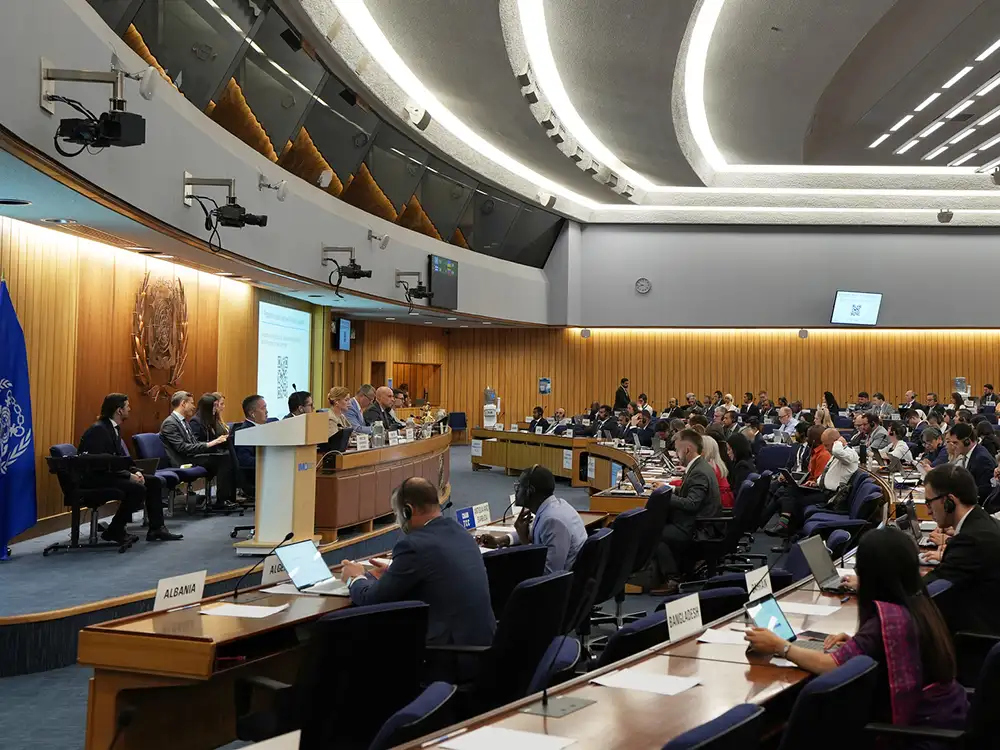
Six months after the Middle East conflict began, restrictions in the Strait of Hormuz continue to disrupt shipments of fuel, fertilizers and other essential commodities
Hundreds of Ships Remain Exposed
Up to 400 merchant vessels carrying around 6,000 seafarers have been unable to safely leave the Persian Gulf since the Middle East conflict began, International Maritime Organization Secretary-General Arsenio Dominguez has warned.
According to the IMO statement issued on August 28, the conflict started on February 28, 2026. Some vessels and their crews have since departed, but the situation in the Strait of Hormuz remains unresolved six months later.
The IMO has verified at least 70 attacks against international shipping since the beginning of the conflict. Nineteen seafarers have been killed.
“Renewed political will and cooperation is needed,” IMO Secretary-General Arsenio Dominguez said
Disruption Extends Across Global Supply Chains
The restrictions affect more than the safety of ships and crews. The Strait of Hormuz is a major route for crude oil, refined fuels, liquefied natural gas, chemicals, fertilizers and other strategically important commodities.
Unstable navigation increases waiting times and voyage durations, disrupts tanker-fleet rotation and forces cargo owners to add larger buffers to delivery schedules. Shipping companies also face higher insurance premiums and must regularly reassess the risks of entering or leaving the Gulf.
The effects extend to producers and consumers far beyond the region. Delays involving fuel and raw materials can influence electricity costs, agricultural markets, industrial production and international freight rates.
IMO Evacuation Framework Is Paused
The IMO established a voluntary framework intended to facilitate the safe departure of merchant vessels confined within the Persian Gulf. According to the organization’s latest Middle East shipping information, 136 vessels and an estimated 2,900 seafarers left the region under the mechanism between June 23 and June 26.
The evacuation plan is currently paused. The IMO has not announced when its implementation could resume.
Around 20,000 seafarers, together with port workers and offshore crews, are affected across the wider region. Ships that remain in the Gulf require continued access to food, drinking water and fuel, as well as crew-change arrangements and reliable communication between seafarers and their families.
IMO Council Calls for Unhindered Transit
In July, the IMO Council adopted a resolution on the protection of vital shipping lanes. It reaffirmed that transit passage through straits used for international navigation must not be threatened, impeded, denied or suspended.
The Council called for a coordinated and sustainable return to unhindered navigation through the Strait of Hormuz. Dominguez urged Member States, shipping companies, the IMO and the wider United Nations system to cooperate on practical measures capable of restoring freedom of navigation.
The resolution alone does not guarantee that carriers will return. Shipowners need credible security assurances, transparent transit procedures, available war-risk insurance and evidence of a sustained decline in attacks.
Carriers Need Credible Security Guarantees
Conditions in Hormuz are being aggravated by security threats on other routes, including the Red Sea, the Gulf of Aden and the Black Sea. Rerouting vessels around Africa can reduce exposure to some dangerous areas, but it increases voyage distance, fuel consumption, fleet requirements and delivery times.
Regular traffic through Hormuz is therefore likely to recover gradually. The industry will monitor actual transit numbers, the return of large tankers and gas carriers, insurance costs and the willingness of operators to restore scheduled services.
As K2Cargo.News previously reported, visible commodity-vessel traffic through the strait fell to only seven ships on August 27, while Iran and Oman continued discussing a possible joint navigation corridor. Final operating rules have not yet been published.
Read also: Analytical Report: The Blockade of the Strait of Hormuz During the U.S.-Israeli War Against Iran