

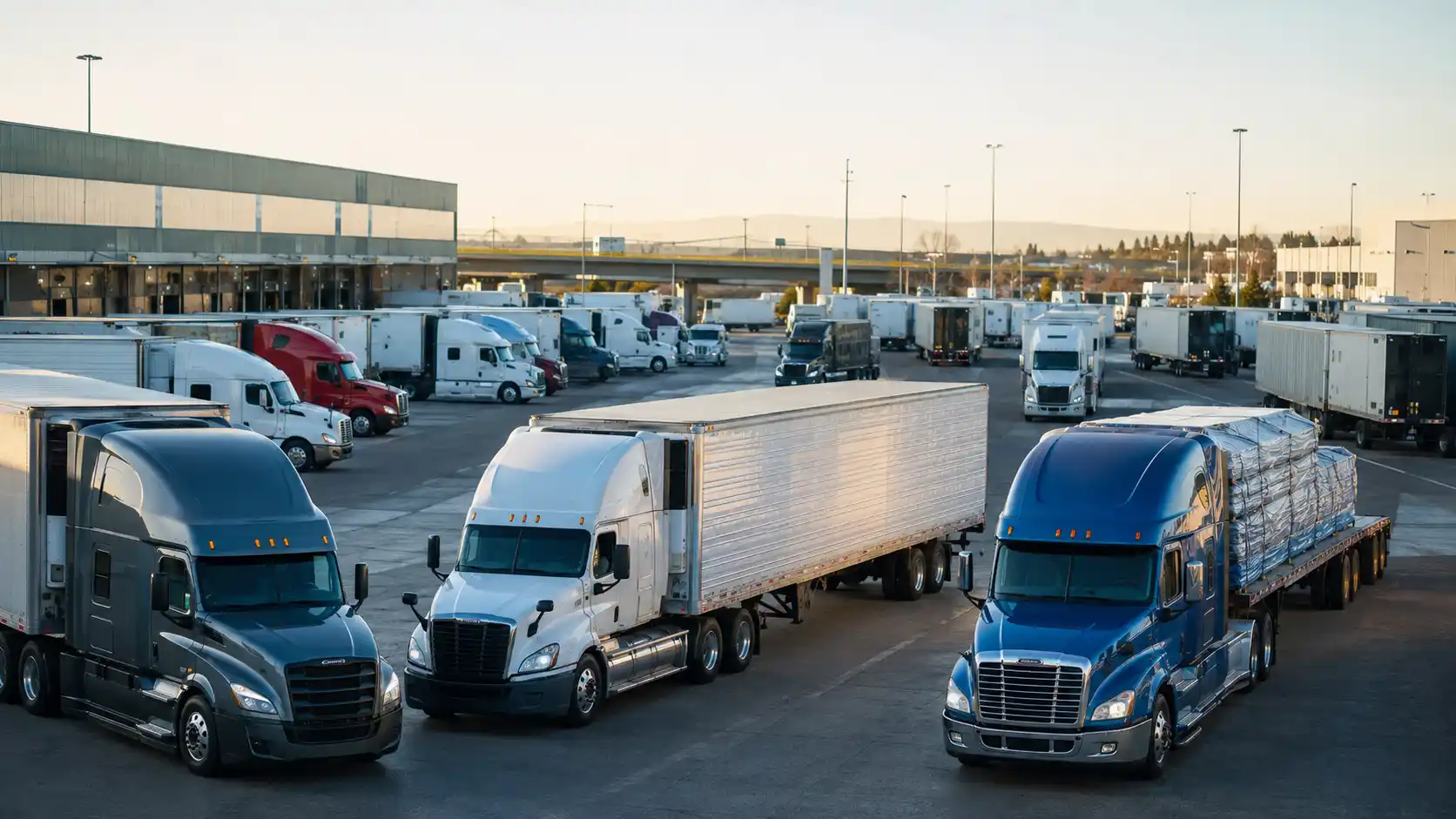
The editorial list includes major transportation groups and specialized carriers providing LTL, intermodal, temperature-controlled and dedicated contract services
The List Includes 100 Transportation Providers
U.S. industry publication Inbound Logistics has released its 2026 Top 100 Truckers list, recognizing transportation companies offering broad and specialized solutions in a volatile freight market.
The selection includes international logistics groups, nationwide carriers and regional operators serving individual U.S. states or specialized freight segments. Major names include UPS, XPO, Ryder System, Schneider, Uber Freight, TFI International, ArcBest, Old Dominion Freight Line, Saia, Werner Enterprises, Penske Logistics and R+L Carriers.
“The 2026 list showcases how the best in the business are adapting to new trade policies and an evolving economic landscape,” Inbound Logistics said
The companies are presented alphabetically. The publication does not rank them from first to 100th, meaning that a carrier appearing near the beginning of the directory did not necessarily receive a higher score than the other participants.
Editors Selected the Companies
Top 100 Truckers is an editorial selection rather than a reader vote. Applicants provided information about operating areas, transportation services, industries served, certifications and additional logistics capabilities.
According to the Inbound Logistics selection process, the publication’s editorial team made the final decisions. Applications for the 2026 list closed on August 17.
The directory is therefore not a ranking of the largest fleets, highest-revenue companies or lowest-cost providers. It does not use one publicly disclosed quantitative measure to compare every participant.
Instead, the publication includes different business models, ranging from global transportation groups to niche carriers specializing in particular cargoes, operating regions or equipment types.
LTL and Integrated Logistics Dominate
A substantial share of the selected companies provides less-than-truckload services, which consolidate freight from several customers in one vehicle. LTL is particularly important for small and medium-sized companies, ecommerce businesses, retailers and manufacturers that do not require a full trailer.
The list includes leading North American LTL operators such as Old Dominion Freight Line, XPO, Saia, ArcBest, TForce Freight, Pitt Ohio, Southeastern Freight Lines, AAA Cooper Transportation, Central Transport and Ward Transport & Logistics.
Many carriers have expanded beyond terminal-to-terminal transport. Their portfolios now include brokerage, transportation management, intermodal operations, warehousing, dedicated fleets, final-mile delivery and end-to-end supply chain services.
This diversification allows providers to retain customers when demand weakens in one market segment. A shipper can use the same partner for line-haul transportation, terminal distribution, warehousing and final delivery.
Specialization Remains a Competitive Advantage
Some participants focus on complex or sensitive cargoes. Anderson Trucking Service, Bennett Family of Companies, PGT Trucking and PS Logistics provide flatbed, heavy-haul and oversized transportation services.
C.R. England, Stevens Transport and other operators specialize in temperature-controlled logistics for food, beverages, pharmaceuticals and products requiring managed conditions.
Quantix focuses heavily on chemical supply chains, while Quality Carriers serves the bulk chemical transportation market. These operations require specialized equipment, driver training, hazardous-materials compliance and additional documentation.
The list also includes expedited carriers, intermodal operators, drayage providers, final-mile companies and dedicated-fleet specialists. This reflects the structure of North American freight transport, where both integrated and highly specialized providers can serve different shipper requirements.
Technology Is Becoming a Standard Requirement
Inbound Logistics highlights technology, operating efficiency and service diversification as key characteristics of the selected carriers.
For major transportation providers, digitalization includes transportation management systems, shipment tracking, electronic data exchange, customer API integration, route optimization and capacity forecasting.
Central Transport lists digital supply-chain and API integration among its capabilities. Uber Freight applies a platform-based model to freight matching, while major operators including UPS, Ryder, Schneider and Penske combine physical transportation networks with digital freight management.
For shippers, these systems provide location data, estimated arrival times, disruption alerts and proof of delivery. Such functions are becoming particularly important in multimodal operations and high-volume supply chains.
Certifications Support Carrier Assessment
The company profiles list certifications and compliance programs related to safety, customs procedures and environmental performance.
SmartWay, operated by the U.S. Environmental Protection Agency, is one of the most frequently cited programs. It is used to evaluate and reduce fuel consumption and emissions in freight transportation.
Many cross-border carriers also report C-TPAT, FAST and Partners in Protection compliance. These programs support supply-chain security and cooperation with U.S. and Canadian customs authorities.
HazMat authorization is essential for companies transporting dangerous goods. TWIC compliance is relevant to port and intermodal work, while carriers handling government or defense cargo may require additional approvals.
Inclusion in the Top 100 directory does not replace a shipper’s own verification of operating authority, insurance, safety performance and service capabilities before awarding a contract.
North America Is the Primary Market
Most selected companies operate in the United States, Canada and Mexico. Some focus on individual states or regions, while ArcBest, UPS, TFI International, Ryder and several other groups provide broader international coverage.
Cross-border freight within North America requires integration with customs systems, knowledge of U.S. and Canadian rules and the ability to manage traffic through congested border crossings.
The largest international provider is not always the best option for every shipment. A regional carrier may offer denser coverage, shorter lead times and more specialized service on a particular lane. The directory should therefore be treated as a guide to potential partners rather than a table identifying one overall winner.
What the List Means for Shippers
The 2026 Top 100 Truckers list shows that competitiveness in road freight increasingly depends on more than fleet size. The ability to combine services, provide digital visibility and meet specialized customer requirements has become central.
Global logistics groups, large LTL networks, platform operators and regional carriers all remain relevant. Choosing between them depends on geography, cargo type, delivery requirements, shipment frequency and the need for additional services.
As K2Cargo.News previously reported, North America’s trucking sector has started moving beyond four years of excess capacity and depressed freight rates. The recovery remains uneven, making network efficiency, technology and diversification critical to carrier resilience.
Read also: LTL Market Trends: FedEx Spin-off and Amazon Freight Expansion