

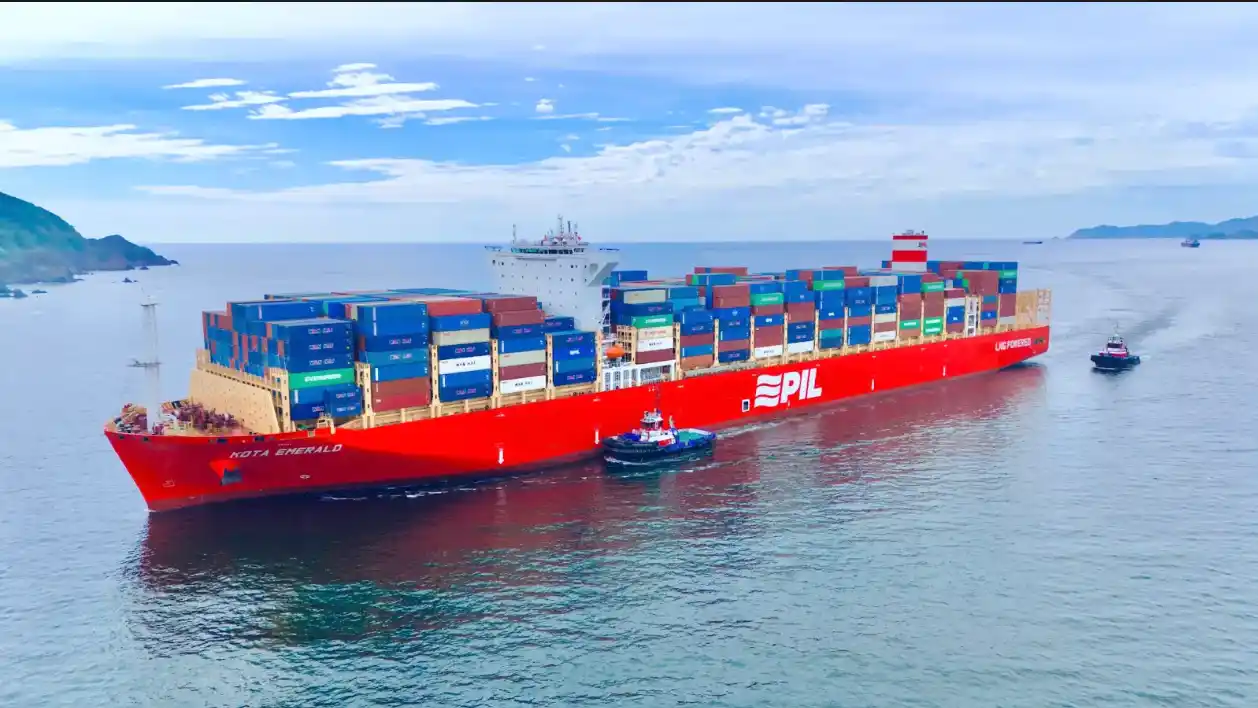
The new direct loops will connect India’s Nhava Sheva and Mundra ports with Mombasa in Kenya and Dar es Salaam in Tanzania
Carriers Expand Their African Networks
Major container carriers are strengthening their presence on the India–East Africa trade. HMM, COSCO Shipping, Pacific International Lines and Interasia Lines are preparing regular direct connections with the principal maritime gateways of Kenya and Tanzania.
The partners initially announced a single weekly service marketed by HMM as Gulf–India–East Africa, or GIA, and by PIL as Imara Express, or IMX. The original configuration was expected to deploy five container ships with a capacity of approximately 2,800 TEU each.
The HMM and PIL announcements therefore do not represent two entirely independent fleets. They form part of a broader jointly operated network marketed under different commercial names by participating carriers.
Network Divided Into Two Dedicated Loops
PIL subsequently reconfigured the Imara Express service into two dedicated weekly loops. The structure is intended to prevent delays at one East African port from affecting the entire rotation.
IM1 will operate from Nhava Sheva to Mundra and Dar es Salaam before returning to Nhava Sheva. Its first departure from India is scheduled for September 24, 2026.
IM2 will connect Nhava Sheva and Mundra directly with Mombasa, followed by a return to India. The inaugural sailing is planned for September 23.
HMM is also positioning GIA as an expansion of its African network. The South Korean carrier said the Indian gateways would support direct connections with Kenya and Tanzania.
Direct Calls Could Improve Schedule Reliability
Separating the network allows Mombasa and Dar es Salaam to be served independently. If congestion or operational restrictions affect one port, the disruption should not automatically spread across the entire East African rotation.
For cargo owners, the new structure offers more direct access to destination ports, weekly frequency and the potential to reduce transshipment requirements. Actual transit times will still depend on terminal congestion, weather conditions and vessel schedule performance.
Mombasa provides access not only to Kenya but also to inland corridors serving Uganda, Rwanda, South Sudan and eastern areas of the Democratic Republic of the Congo. Dar es Salaam handles Tanzanian cargo as well as transit shipments for Zambia, Malawi, Burundi, Rwanda and the DRC.
Indian Exporters Gain Additional Capacity
Nhava Sheva and Mundra are among India’s largest container gateways. Their export flows include pharmaceuticals, vehicles and components, machinery, chemicals, textiles, food products and consumer goods.
The new services could make deliveries of these products to East Africa more predictable. Return cargo may include agricultural commodities, tea, coffee, tobacco, minerals and other regional exports.
Additional direct capacity could increase competition among carriers, but it does not automatically guarantee lower freight rates. Pricing will depend on the balance of container flows, port charges, equipment availability and actual vessel utilisation.
Ports and Inland Corridors Face Additional Demand
Regular direct calls will generate additional demand for container handling, warehousing, customs clearance and inland transportation from Mombasa and Dar es Salaam.
The effectiveness of the services will depend on coordination between vessel schedules, terminals and land transport. If cargo growth is not matched by greater port, railway and border-crossing capacity, some of the time saved at sea could be lost after containers are discharged.
K2Cargo.News previously reported that EAEU–Kenya trade reached $460.2 million, while turnover more than doubled in early 2026. The new services from India provide further evidence of carrier interest in East Africa, although their long-term viability will depend on cargo volumes and infrastructure reliability.
Read also: EAEU–Kenya Trade Reached $460.2 Million