

The 30-year concession includes terminal upgrades, dredging, digital systems and new transit corridors connecting Southern Europe, the Middle East and North Africa
Syria is seeking to restore Tartus Port as one of the main trade and logistics hubs in the Eastern Mediterranean. To support the project, the Syrian General Authority for Land and Sea Ports has brought in DP World, the UAE-based global port operator.
The agreement was signed on July 13, 2025, and covers a 30-year concession period. DP World plans to invest a total of $800 million over the duration of the contract.
The project follows a Build-Operate-Transfer structure. DP World will modernize and operate Tartus before eventually transferring the infrastructure back to the Syrian state.
The development has already moved beyond the announcement stage. In November 2025, DP World formally commenced operations at Tartus Port, beginning a detailed assessment of the port’s berths, warehouses, equipment and marine infrastructure.
Syria’s Second-Largest Port Requires Major Modernization
Tartus is Syria’s second-largest commercial port and one of the country’s two primary maritime gateways, alongside Latakia. Its location provides access to routes connecting the Levant with Southern Europe, Türkiye, North Africa and the Gulf region.
However, years of conflict, international isolation and limited investment have left substantial parts of the port infrastructure outdated. Existing equipment and terminal capacity do not fully meet the requirements of modern container and general cargo operations.
Under the 30-year concession agreement, DP World plans to upgrade container and multipurpose terminals, install modern cargo-handling equipment, expand storage capacity and introduce digital port-management platforms.
The first phase involves a comprehensive infrastructure assessment. Specialists are reviewing quay readiness, cargo-handling machinery, yards, warehouses and access channels before preparing a detailed redevelopment schedule.
Dredging Will Allow Larger Ships to Enter Tartus
Dredging the port’s access channels, basins and berths will be among the immediate priorities. Greater and more reliable water depths should enable Tartus to receive larger bulk carriers and container vessels while reducing the need for ships to operate with restricted loads.
DP World also intends to rehabilitate existing equipment and deploy specialized machinery for bulk, breakbulk and project cargo. Container facilities and infrastructure for handling cars and other Ro-Ro cargo are expected to be expanded during subsequent phases.
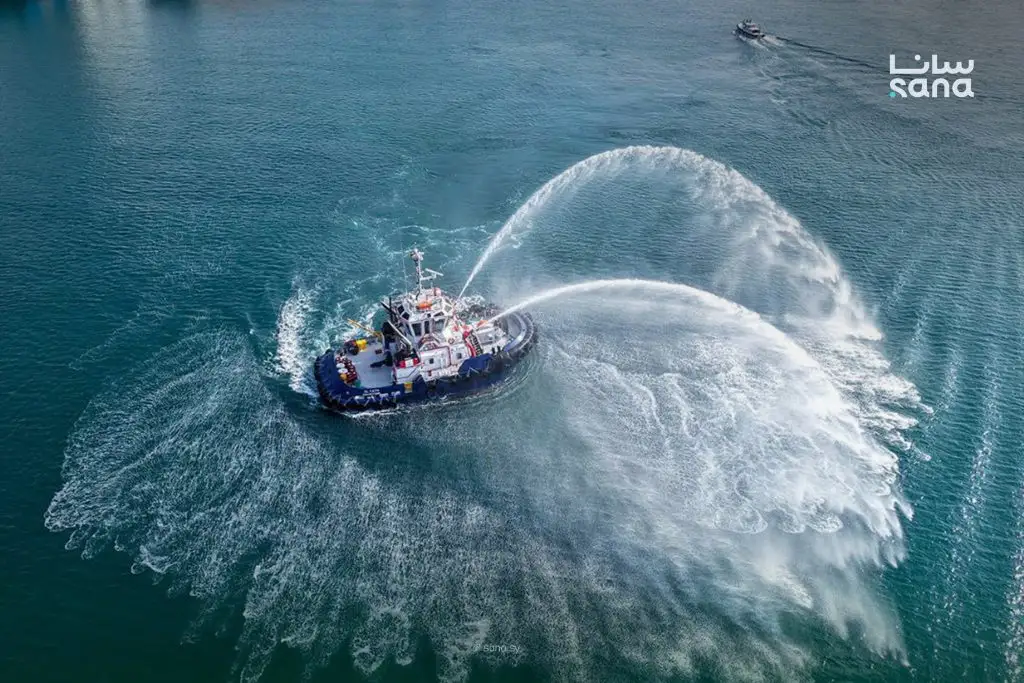
One of the first visible operational upgrades was the arrival of the 22-meter harbor tug Al Fath. The vessel has a bollard pull of 50 tonnes and is equipped with firefighting water cannons. It will assist large vessels during berthing operations and support emergency response inside the port.
Tartus Is Intended to Become More Than a Seaport
DP World’s strategy includes the development of a wider logistics ecosystem around Tartus. The company is exploring opportunities to establish free economic zones, inland distribution centers and transit corridors.
This approach could transform Tartus from a basic loading and unloading point into an integrated hub combining maritime transport, trucking, warehousing, customs clearance and industrial operations.
Syria urgently needs reliable supply routes for construction materials, food, fuel, industrial equipment and consumer goods. A modernized Tartus could also support exports of agricultural products, minerals and goods produced in future industrial zones.
Transit Potential Depends on Inland Connections
Tartus is positioned to serve more than the domestic Syrian market. In the longer term, it could handle cargo moving to and from Iraq, Jordan and other regional destinations.
A functioning inland corridor from the Mediterranean to Middle Eastern markets could provide an alternative for some cargo currently transported through longer routes involving the Suez Canal or Gulf ports.
Port modernization alone, however, will not be enough. Syria also needs to restore highways, rail links, border infrastructure and customs systems. Faster vessel handling will provide limited benefits if containers face extended delays after leaving the terminal.
DP World Will Introduce Digital Port Management
Digitalization is another central element of the program. DP World plans to deploy its own platforms for cargo-flow management, berth planning and warehouse control.
The technology is expected to increase operational transparency, reduce paperwork and shorten vessel turnaround times. The operator will also train employees and introduce international industrial and maritime safety procedures.
Fahad Al Banna has been appointed CEO of DP World Tartus. He previously held senior positions in container operations at Dubai’s Jebel Ali Port. His experience is expected to help transfer operational methods from one of the world’s largest port complexes to the Syrian facility.
The Project Remains a Long-Term and High-Risk Investment
The proposed $800 million investment covers the entire 30-year concession. It should not be interpreted as an immediate payment or confirmation that all redevelopment work will be completed within the next several years.
The pace of modernization will depend on political stability, international sanctions, access to banking and investment services, the security of regional transport corridors and Syria’s broader economic recovery.
Demand from container shipping lines will also be critical. To attract regular services, Tartus will need competitive tariffs, sufficient water depths, reliable equipment and predictable customs procedures.
The port will compete with established regional gateways including Mersin, Beirut, Haifa, Piraeus and Egyptian terminals. Its initial objective is therefore not to become the largest Eastern Mediterranean port immediately, but to restore reliable handling of Syrian imports and exports.
A Path Back into Regional Trade
For DP World, Tartus expands the company’s presence in the Eastern Mediterranean and adds another location to its global terminal network. For Syria, the agreement represents one of the largest foreign investments in national transport infrastructure in recent years.
Successful modernization could reduce import costs, accelerate the delivery of reconstruction cargo and create new transit opportunities. Free zones and inland logistics facilities could also attract manufacturers, warehouses and distribution businesses.
Tartus cannot yet be considered a fully developed international hub. Nevertheless, DP World’s assumption of port operations has moved the project from political agreements into a practical implementation phase. If maritime and inland infrastructure are rebuilt together, Syria could gradually recover its position within the Mediterranean logistics system.
As K2Cargo.News previously reported, Middle Eastern countries are increasingly investing in ports, inland corridors and distribution centers to diversify transport routes and strengthen regional supply chains.
Read also: Middle East Logistics News