

Rates Will Be Adjusted for Inflation
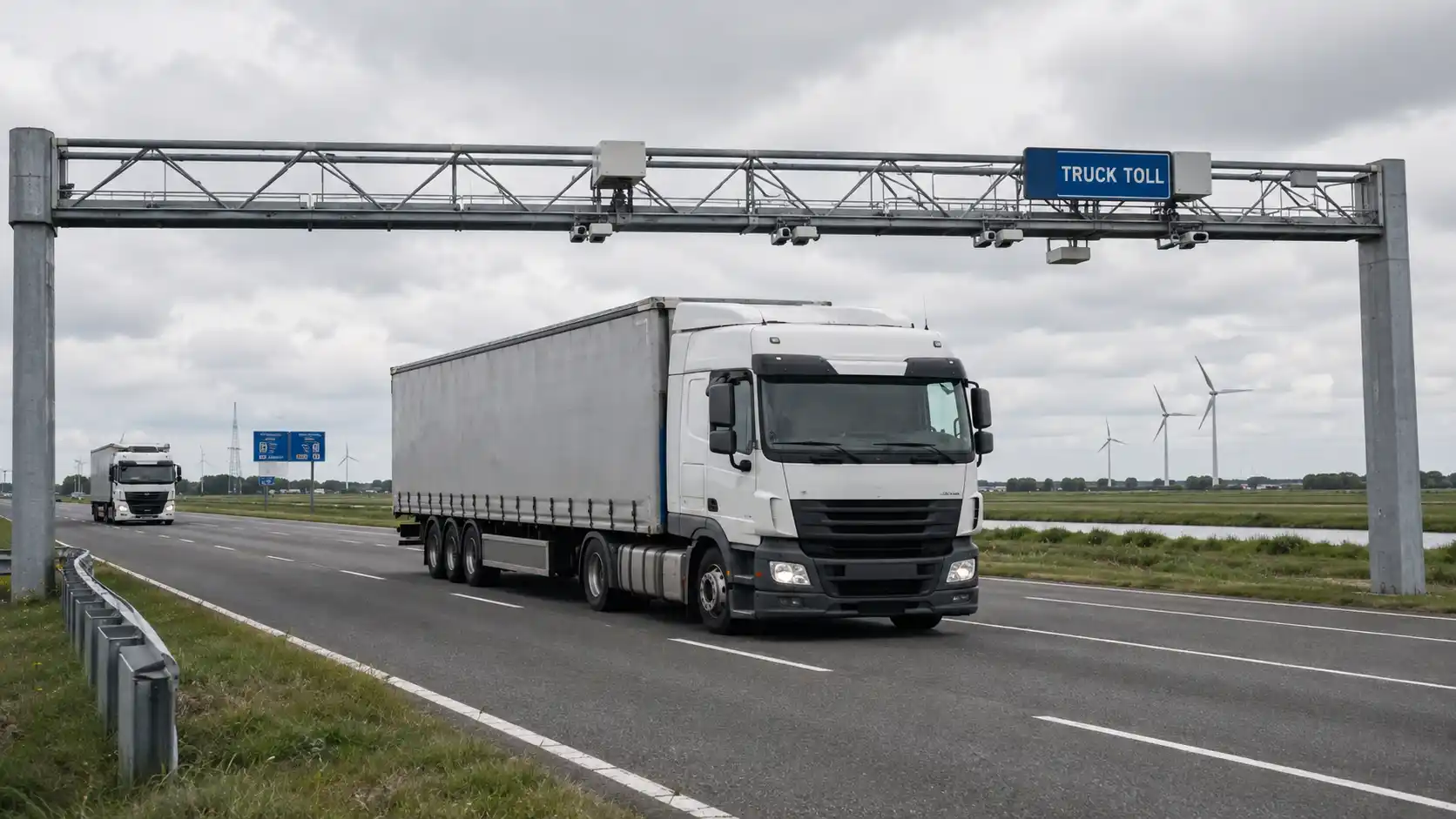
The Netherlands will increase its distance-based truck toll rates by 2.6% from January 1, 2027. According to the Netherlands Vehicle Authority, the rates are being adjusted to reflect Dutch inflation. This indexation will take place annually on January 1.
The Dutch distance-based truck charging system became operational on July 1, 2026. The amount payable depends on the vehicle’s technical maximum mass, CO₂ emissions class and EURO emissions standard.
“Truck toll rates will increase by 2.6% from January 1, 2027,” RDW said
The provisional rate for the most common EURO VI diesel truck weighing more than 32 tonnes will be €0.206 per kilometre. An electric truck in the same weight category will pay €0.040 per kilometre.
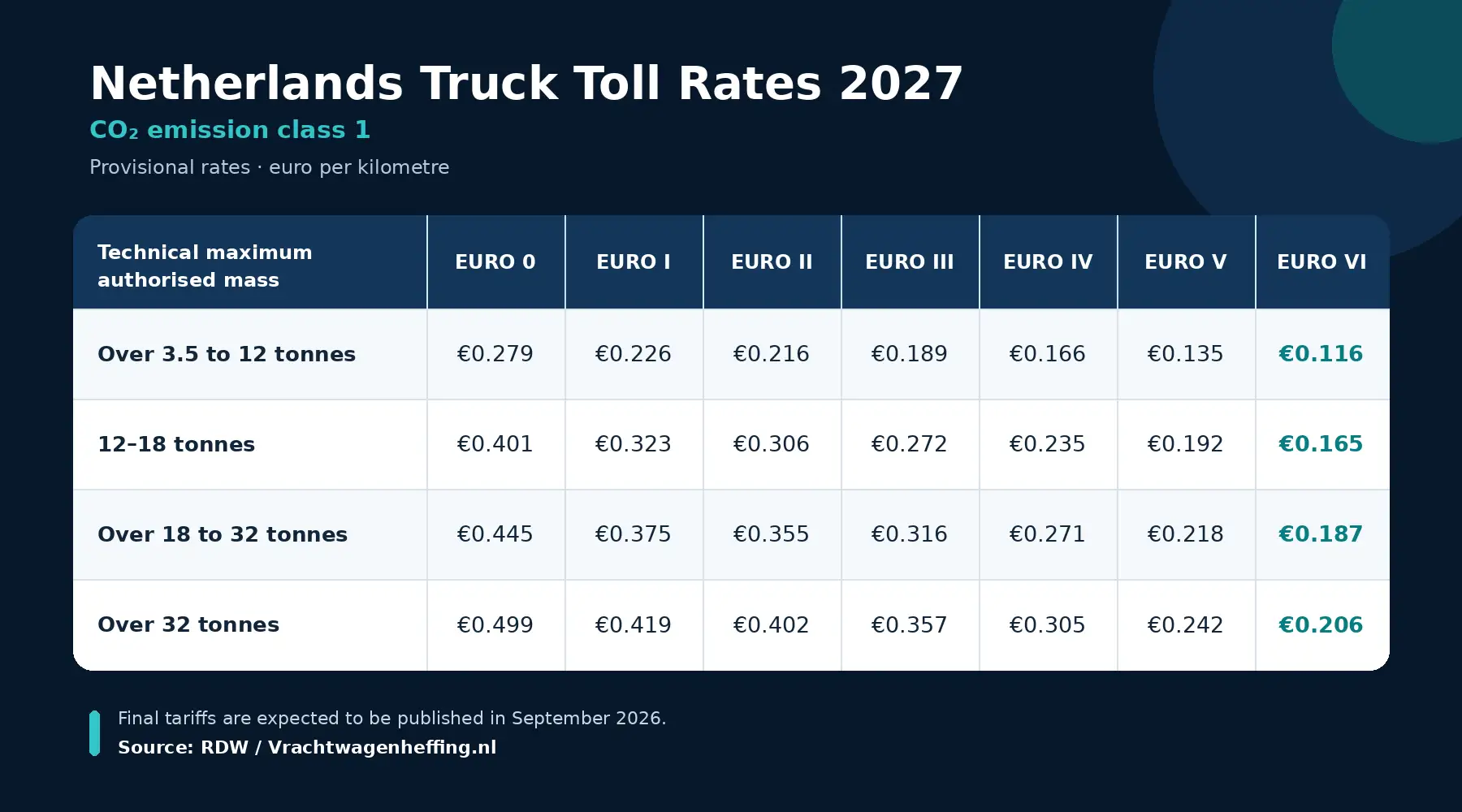
Rates for CO₂ Emissions Classes 2–5
Cleaner vehicles benefit from considerably lower toll rates. Electric trucks generally fall within CO₂ emissions class 5 and pay substantially less than comparable diesel vehicles.
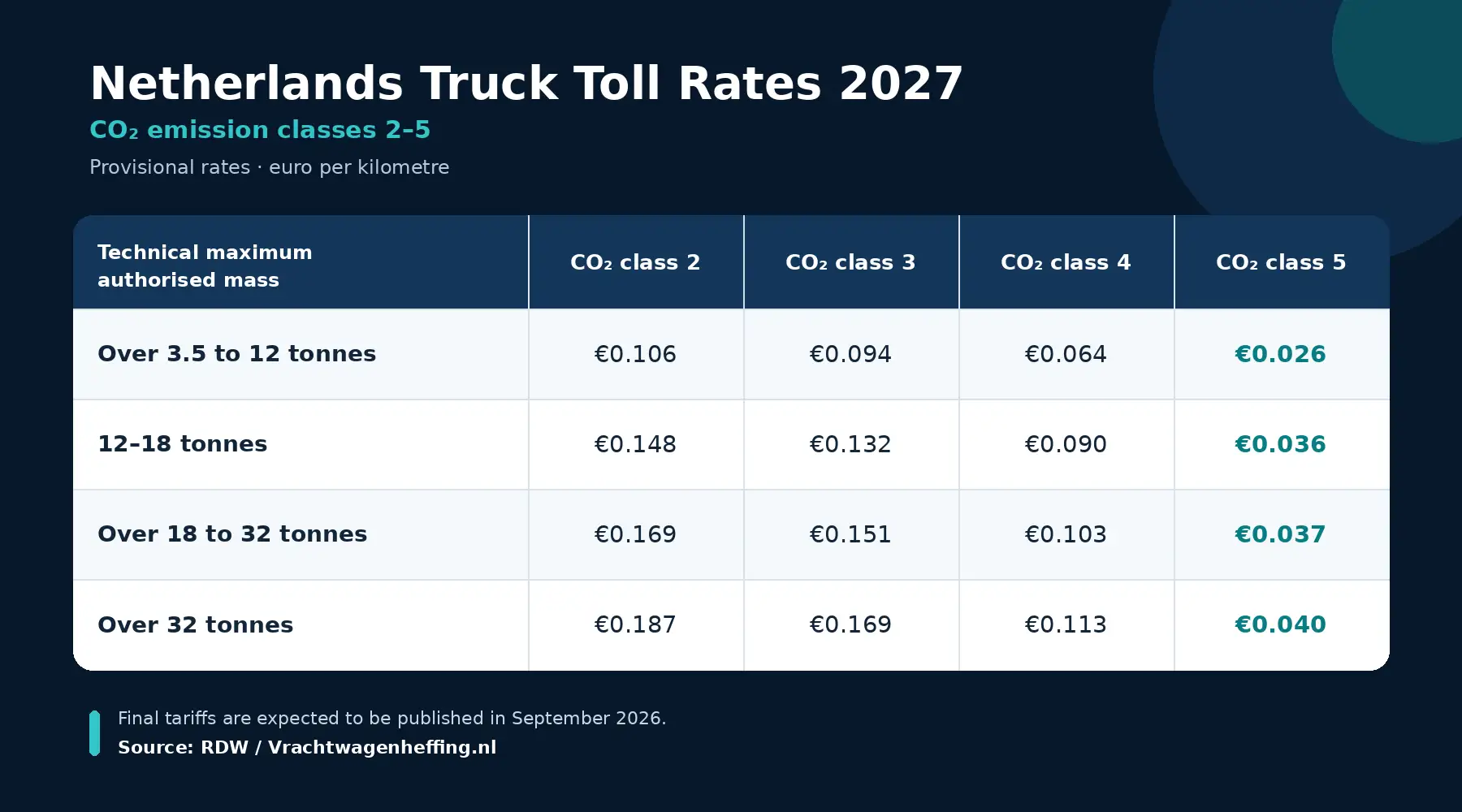
The complete rate tables by vehicle weight and emissions class are available on the official Dutch truck charging website.
Temporary 22.3% Discount Runs Until the End of 2026
Before the higher 2027 rates take effect, carriers will receive temporary relief. From September 1 through December 31, 2026, all truck toll rates will be reduced by 22.3%.
The government introduced the measure in response to sharply higher fuel prices caused by the conflict in the Middle East. The discount applies to every truck, regardless of its weight, emissions class or powertrain.
For a EURO VI diesel truck weighing more than 32 tonnes, the rate was €0.201 per kilometre before the discount. It will fall to €0.156 between September and December before rising to €0.206 in January 2027.
This means the actual payment will increase by approximately 32% compared with the temporary discounted rate, even though the official inflation adjustment is only 2.6%.
For an electric truck weighing more than 32 tonnes, the rate will rise from the temporary €0.030 to €0.040 per kilometre, an increase of around 33%.
Diesel and Electric Truck Cost Comparison
For 10,000 kilometres driven on the toll network, the provisional 2027 charges would be:
- EURO VI diesel truck above 32 tonnes — €2,060;
- electric truck in the same weight category — €400.
The difference is €1,660 per 10,000 kilometres. A carrier’s final cost may be higher because toll service providers can charge separately for additional services and onboard equipment.
Which Vehicles Must Pay
The toll applies to Dutch and foreign vehicles in categories N2 and N3 with a technical maximum mass above 3.5 tonnes. Payment is required regardless of the vehicle’s use and whether it is loaded or empty.
The charging network covers almost all Dutch motorways and selected provincial and municipal roads. Carriers must have a contract with an authorized service provider and keep a functioning onboard unit in the vehicle.
The Netherlands withdrew from the Eurovignette system on July 1, 2026. The Eurovignette nevertheless remains in use in Sweden and Luxembourg.
Final Rates Expected in September
The published 2027 rates have not yet been formally adopted. The Dutch Ministry of Infrastructure and Water Management is expected to confirm them in September through publication in the Staatscourant official gazette.
Carriers operating regular services in the Netherlands should account for both the 2.6% inflation adjustment and the expiry of the temporary discount. The end of that relief will have the greater impact on operating costs from January 2027.
Read also: Netherlands Introduces Distance-Based Road Tax for Trucks Above 3.5 Tonnes