

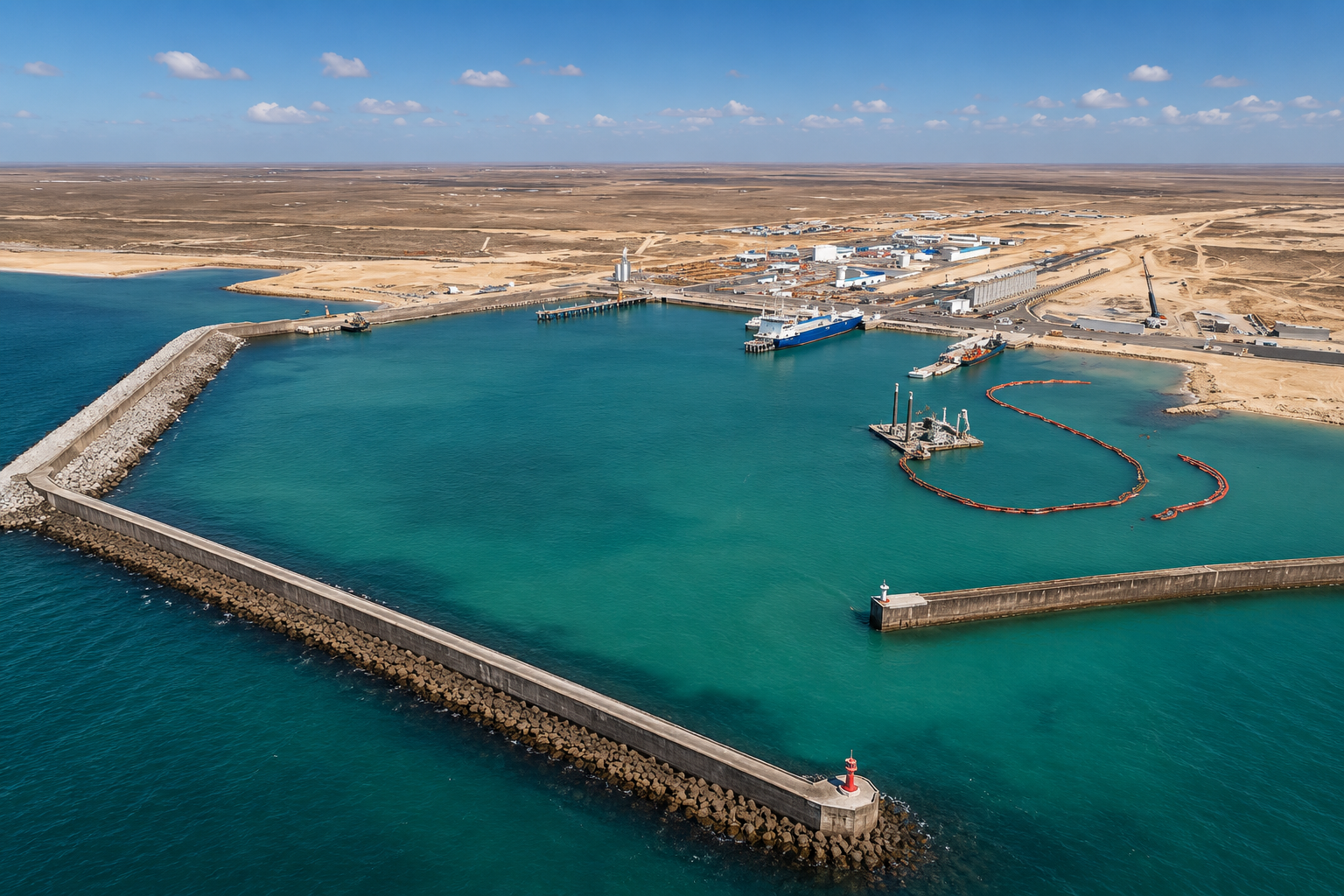
Ferry Operations Accelerate at Kuryk Port
Kazakhstan’s Kuryk Port has reduced the handling time for railway ferries from 18 to 12 hours following the modernization of its first lifting bridge.
The six-hour reduction represents a 33.3% improvement compared with the period before the infrastructure upgrade was completed in March 2026. The port has also increased the number of railway wagons loaded onto a ferry during a single call from 40 to 46, raising capacity by 15%.
The improvements strengthen the port’s ability to process freight moving across the Caspian Sea and reduce the amount of time vessels spend at the berth. Faster ferry rotation is particularly important for the Trans-Caspian International Transport Route, where delays at maritime terminals can affect the entire multimodal journey between China, Central Asia, the Caucasus and Europe.
Kuryk’s growing role in this system reflects the broader transformation described by K2Cargo News in its analysis of why Kazakhstan and Georgia are becoming key hubs of Eurasia’s new logistics network. The article highlights investment in the Caspian ports of Kuryk and Aktau as an important part of Kazakhstan’s strategy to strengthen the Middle Corridor.
Modernized Bridge Increases Ferry Capacity
The first lifting bridge was officially commissioned after modernization in March 2026. The facility connects railway tracks onshore with the ferry deck, allowing wagons to be rolled directly onto and off the vessel.
Increasing the one-time load from 40 to 46 wagons means that each ferry can carry six additional units without requiring another voyage. This improves vessel utilization and can reduce the cost of transporting each wagon across the Caspian Sea.
The combination of greater capacity and shorter turnaround time gives the port the ability to process more cargo with the existing ferry fleet. It may also reduce queues of rail wagons awaiting shipment and improve coordination between railway operators and maritime services.
The market has already responded to the faster operations. Railway cargo handled by the port increased from 21,700 tonnes in January to 135,700 tonnes in May 2026, almost six times the January level.
Second Bridge and Berths Are Being Upgraded
Kuryk Port is continuing the modernization program by upgrading its second lifting bridge and berth infrastructure.
The next stage is expected to stabilize loading and unloading operations at approximately 10–12 hours. The work should also provide additional flexibility when one bridge is occupied, undergoing maintenance or temporarily unavailable.
Two modernized bridge systems could allow the port to serve ferries more consistently and reduce operational risks associated with dependence on a single facility.
For railway operators, greater reliability at the port is as important as higher nominal capacity. Predictable ferry schedules help coordinate train arrivals, manage wagon fleets and avoid congestion on access tracks.
Cargo Throughput Reached 1.95 Million Tonnes
Kuryk Port handled approximately 1.95 million tonnes of cargo in 2025. During the first five months of 2026, throughput reached around 731,500 tonnes.
Monthly cargo volumes in January–May amounted to approximately 93,000 tonnes, 122,200 tonnes, 165,800 tonnes, 142,900 tonnes and 207,600 tonnes respectively. May was therefore the strongest month of the period.
The increase in railway ferry activity suggests that the modernization is already influencing the structure of cargo flows. However, the port’s annual performance will also depend on demand along the Middle Corridor, ferry availability, weather conditions on the Caspian Sea and coordination with ports in Azerbaijan.
Kuryk is located on the eastern Caspian coast south of Aktau. Its natural bay provides favourable conditions for loading and unloading operations, particularly the roll-on and roll-off handling of railway wagons. The ferry terminal processes grain, petroleum products, fertilizers, chemicals and other cargoes.
Faster Operations Support the Middle Corridor
The maritime section remains one of the most complex parts of the Middle Corridor because cargo must be transferred between rail and sea transport on both sides of the Caspian.
Every reduction in ferry turnaround time can improve the overall predictability of the route. Shorter port stays allow ships to complete more rotations, while additional wagon capacity increases the volume that can be transported without expanding the fleet immediately.
These operational improvements are especially important as container and general cargo flows along the Trans-Caspian route continue to grow. In 2025, the corridor handled around 4.12 million tonnes, while container traffic reached approximately 77,000 TEU. Kazakhstan and its partners aim to increase container volumes to 300,000 TEU by 2029.
The modernization of Kuryk therefore has implications beyond the port itself. More efficient ferry operations can reduce railway congestion in Kazakhstan, improve vessel schedules across the Caspian and support faster onward movement through Azerbaijan, Georgia and Türkiye.
Port Development Is Moving Beyond Ferry Infrastructure
Kuryk is also expanding its ability to handle other types of cargo.
A new terminal for dry and general cargo entered operation in 2025, while investments are being made in grain-handling capacity. The first phase of the Sarzha grain terminal is designed to handle 570,000 tonnes annually, with potential capacity rising to 1.5 million tonnes after the second phase.
Together with the bridge and berth modernization, these projects are gradually transforming Kuryk from a specialized railway ferry facility into a broader multimodal logistics hub.
The port’s future performance will depend not only on physical infrastructure but also on harmonized tariffs, coordinated ferry schedules, digital documentation and efficient customs procedures across the Middle Corridor.
Kuryk Strengthens Its Position on the Caspian
Reducing ferry handling time by one third is a significant operational achievement for Kuryk Port.
The upgrade allows each vessel to carry more wagons and spend less time at the berth, creating additional capacity without waiting for a complete expansion of the port or ferry fleet.
Once the modernization of the second bridge and berths is completed, the port could achieve more stable turnaround times and further strengthen its role in Kazakhstan’s export and transit system.
For the Middle Corridor, the result is an incremental but important reduction of one of the route’s key operational bottlenecks.
Read also: Expert Opinion: Why Kazakhstan and Georgia Are Becoming Key Hubs of Eurasia’s New Logistics Network
