

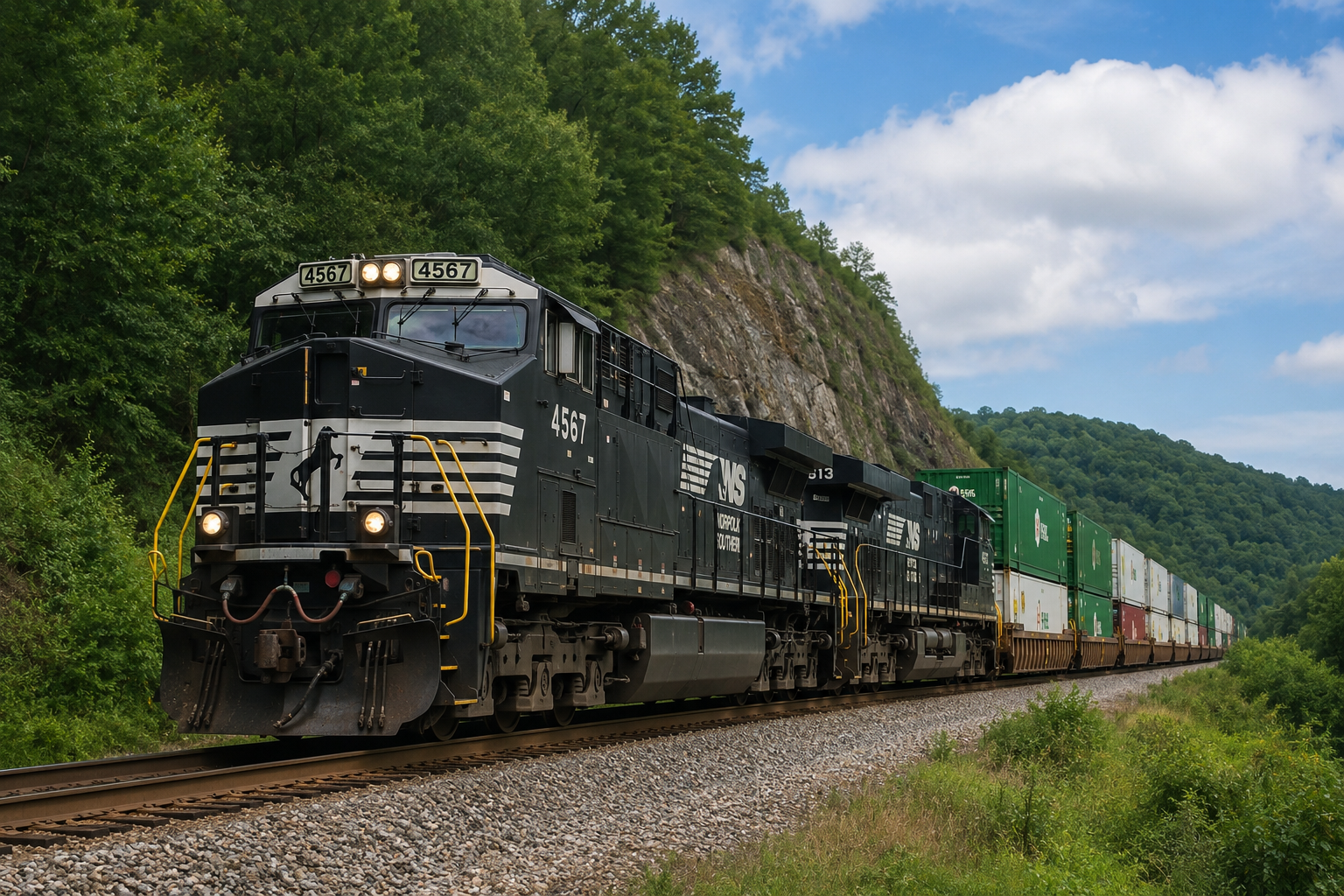
Sometimes the condition of the economy is reflected more clearly in the movement of freight trains than in the performance of stock market indexes.
Norfolk Southern, one of the largest freight railroads in the United States, reported stronger second-quarter financial results as shipment volumes increased across all major areas of its business.
The growth was led by domestic intermodal traffic, energy-related shipments, industrial products, and export coal. For the logistics sector, the results represent more than a strong quarterly report. They suggest that freight flows across the United States are entering a new phase of expansion.
Growth Began in Energy and Spread to Other Markets
Norfolk Southern CEO Mark George said the first major increase in traffic came from stronger energy markets following geopolitical tensions in the Middle East.
That momentum did not remain limited to the energy sector.
Demand soon strengthened across domestic intermodal transportation, industrial shipments, manufacturing, and other major freight categories.
According to company executives, the broad improvement in Norfolk Southern’s freight mix helped the railroad exceed its own expectations for the quarter.
Revenue Reaches a Record Level
Despite continued expenses related to the February 2023 train derailment in East Palestine, Ohio, and costs associated with the proposed merger with Union Pacific, Norfolk Southern reported significant improvements in several key financial indicators.
During the second quarter:
- Operating income increased by 5% to $1.19 billion;
- Revenue rose by 11% to a record $3.46 billion;
- Earnings per share increased by 7% to $3.52.
The railroad’s adjusted operating ratio was 65.5%, an increase of 2.1 percentage points from the same period a year earlier.
Operating expenses rose by 15%, primarily because of higher fuel costs and inflation.
Intermodal Transportation Remains a Major Growth Driver
Norfolk Southern’s total freight volume increased by 4%, with growth reported across all three of the railroad’s major business segments.
Intermodal traffic posted one of the strongest gains.
Domestic container and trailer volumes increased by 5%, reflecting continued demand for rail transportation between major U.S. markets.
Coal shipments increased by 3%, supported by a 25% rise in export volume.
Merchandise freight, including industrial products and other carload traffic, grew by 2%.
Chief Commercial Officer Ed Elkins said shrinking capacity in the trucking market could encourage more customers to move freight from highways to rail, particularly within the domestic intermodal segment.
As available trucking capacity becomes tighter, railroads may gain a larger share of long-distance freight that can be transferred between containers, trailers, trains, and trucks.
The Railroad Is Working to Improve Network Performance
Improving operating efficiency remains one of Norfolk Southern’s most important priorities.
The railroad has continued to stabilize its network after severe winter weather disrupted operations and prevented performance from fully returning to normal.
During the second quarter, terminal dwell time was 5.7% higher than during the same period a year earlier, while average train speed declined by 7.8%.
The company also continues to experience train crew shortages in several areas of its network.
However, management said recent operating trends have become more encouraging.
Over the past four weeks:
- Average train speed has improved each week;
- Terminal dwell time has declined for four consecutive weeks;
- Compliance with merchandise and intermodal operating plans has strengthened.
Chief Operating Officer Brian Barr said successful railroad operations depend on discipline, accountability, and the consistent execution of basic tasks.
According to Barr, railroading is difficult work, and meaningful results come from completing thousands of small operational tasks correctly, day after day.
Management Is Focused on Execution Rather Than a Strategic Reset
Norfolk Southern executives emphasized that the company is not abandoning its operating strategy.
Instead, the railroad is concentrating on improving the consistency of its execution across the network.
The main priorities include:
- Following the operating plan more closely;
- Aligning crews, locomotives, and equipment with customer demand;
- Improving terminal performance;
- Reducing unnecessary variability across the network.
George said the company is encouraged by the recent direction of its operating performance, while Barr acknowledged that significant work remains.
Cost Reduction Targets Remain on Track
Norfolk Southern continues to pursue a broad cost-reduction and efficiency program.
The company expects to exceed its goal of reducing expenses by $150 million this year.
It is also working toward a three-year target of cutting total costs by $650 million.
Management believes that better use of locomotives, terminals, train crews, and other resources will allow the railroad to reduce expenses while continuing to improve customer service.
Safety Performance Also Improves
Alongside its financial and operational results, Norfolk Southern reported improvements in workplace and train safety.
During the quarter:
- The employee injury rate declined by 16%;
- The train accident rate fell by 25%.
Following the East Palestine derailment, safety remains one of the railroad’s most closely watched priorities.
The latest figures indicate progress, although the company continues to face regulatory, financial, and reputational consequences from the 2023 accident.
Why It Matters
Norfolk Southern operates one of the largest freight rail networks in North America, making its financial and traffic results an important indicator of activity within the U.S. economy.
Growth in domestic intermodal volume suggests stronger movement of consumer goods, industrial products, and containers between ports, warehouses, distribution centers, and inland markets.
The increase in export coal shipments also reflects continued international demand for U.S. energy commodities.
For the logistics industry, the results suggest that railroads may become major beneficiaries of changing transportation conditions.
If trucking capacity continues to tighten and rail service improves, more freight could shift from highways to intermodal rail networks.
That transition could increase Norfolk Southern’s shipment volumes, reduce pressure on long-haul trucking capacity, and strengthen the role of rail transportation within U.S. supply chains.
