

Liability Could Extend Across the Entire Chain
The European Union is considering new measures to protect employees working through subcontractors and labour intermediaries. The initiative could directly affect international road freight, where the original client and the company performing a transport operation may be separated by freight forwarders, logistics operators and several contracting companies.
The central issue is determining who should be held responsible when labour violations occur at the lower end of a multi-tier chain. The Commission is examining mechanisms that could allow workers to pursue claims not only against their immediate employer but also against other companies involved in the contract.
Possible liability could cover unpaid wages, minimum remuneration, social security contributions and violations of occupational safety requirements. However, no final regulatory model has yet been selected.
Parliament’s Resolution Is Not New Legislation
The debate gained momentum after the European Parliament adopted a resolution on protecting workers in subcontracting chains on February 12, 2026.
According to the European Parliament’s official procedure summary, the resolution was approved by 332 votes to 209, with 33 abstentions.
The document is non-binding and does not introduce new legal obligations for road carriers. It calls on the European Commission and EU member states to improve transparency and accountability, combat letterbox companies and artificial employment arrangements, and clarify responsibility throughout subcontracting chains.
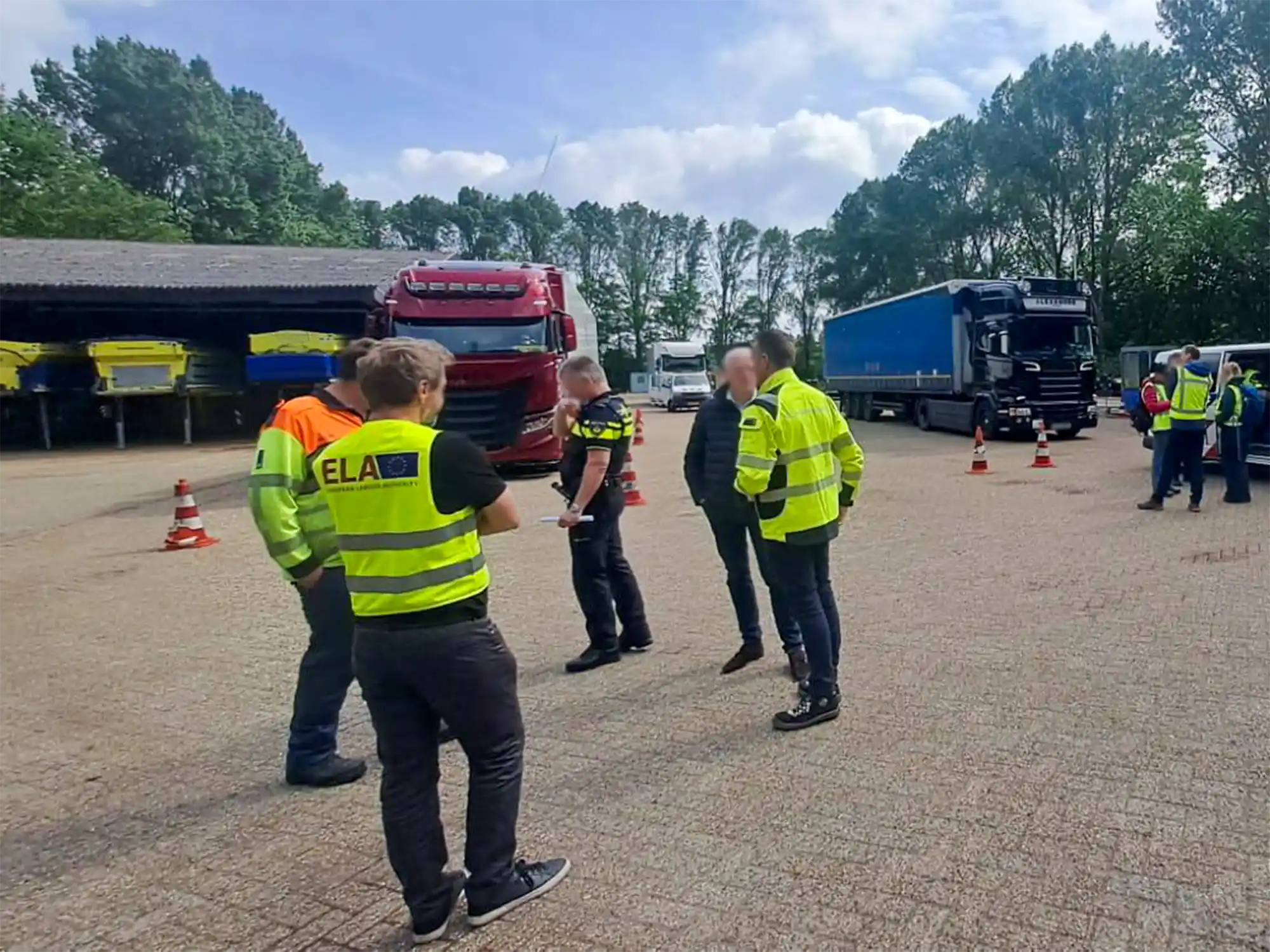
Parliament also recommended strengthening cooperation between the European Labour Authority, Europol and national inspectorates. It proposed creating sector-specific enforcement units within the ELA for transport, construction and agriculture.
A two-level limit on subcontracting has been promoted by trade unions and some transport organisations. However, it was not introduced as a binding rule by the February resolution and is not currently an EU requirement.
Commission Examines Registers, Inspections and Liability
The European Commission launched the second stage of consultation on the future Quality Jobs Act on July 20, 2026.
The Commission’s official announcement identifies five principal areas:
- workers’ rights in subcontracting chains;
- algorithmic management and artificial intelligence at work;
- occupational health and safety;
- fair digital and green transitions;
- enforcement and the role of social partners.
The official consultation document lists several options relevant to transport and logistics.
These include identifying high-risk sectors, setting inspection targets based on risk assessments, improving the visibility of subcontracting chains through registers and introducing liability mechanisms at multiple contracting levels.
The Commission is also examining whether labour intermediaries should be registered or certified and whether additional coordination requirements are needed to protect occupational health and safety.
“The longer and more complex the subcontracting chain, the greater the risk of fraud and abuse could be,” the Commission states.
Any future measure would have to take into account its effect on small and medium-sized companies, cross-border services and the administrative burden placed on compliant businesses.
Why Road Freight Is Considered a High-Risk Sector
Transport and logistics are explicitly listed among labour-intensive industries in which subcontracting can provide flexibility and specialist expertise but may also create downward pressure on labour costs.
Mobile employees, posted drivers and workers from non-EU countries may be particularly vulnerable because of language barriers, limited knowledge of their rights and difficulties seeking compensation after leaving the country in which a violation occurred.
Long contracting chains can also make it difficult for inspectors to identify the actual employer, determine which company controlled the driver’s work and verify whether wages and social contributions were paid correctly.
The problem has previously been examined in European Labour Authority materials on undeclared work in road transport. The ELA found that complicated subcontracting structures can facilitate violations of employment rules and undermine fair competition.
Carriers May Face Additional Compliance Checks
If liability is extended beyond the immediate employer, shippers, freight forwarders and major transport operators may have to carry out more extensive checks before appointing subcontractors.
Contracts could require evidence that drivers have received the correct remuneration, social security contributions have been paid and occupational safety obligations are being observed.
Companies may also have to retain information identifying every business involved in a transport order and make it available to enforcement authorities.
For responsible small carriers, stronger rules could provide protection against excessive price pressure and unfair competition. At the same time, additional documentation and verification requirements could increase administrative costs, particularly for companies with limited compliance resources.
Transport Organisations Remain Divided
The European Transport Workers’ Federation supports full-chain liability, equal treatment for workers performing the same activities and limits on the length of subcontracting chains.
Worker organisations argue that such measures are necessary to prevent companies from transferring risks, responsibility and labour costs to smaller contractors.
Employer organisations take a more cautious position. Germany’s DSLV argues in its official statement on European labour mobility policy that subcontracting is an established and necessary part of modern logistics.
DSLV warns that rigid limits, blanket full-chain liability and additional licensing requirements could increase costs, reduce operational flexibility and accelerate market concentration. It argues that EU policy should prioritise coordinated enforcement, digital information exchange and better application of existing legislation.
Consultation Ends on September 28
The first consultation ran from December 4, 2025, to January 29, 2026. It received submissions from 34 EU-level organisations, comprising 12 trade unions and 22 employer organisations.
The second stage will remain open until September 28, 2026. After that date, European social partners may decide to open negotiations aimed at reaching a joint agreement.
If negotiations begin under Article 155 of the Treaty on the Functioning of the European Union, the Commission will suspend its work on the corresponding parts of the initiative while the discussions continue.
The Commission plans to present a proposal for the Quality Jobs Act later in 2026. Until the legislative text is published and approved, neither a two-tier subcontracting limit nor full-chain liability constitutes an enforceable EU requirement.
Read also: New Report Reveals Widespread Problems in Europe’s International Road Transport Sector