

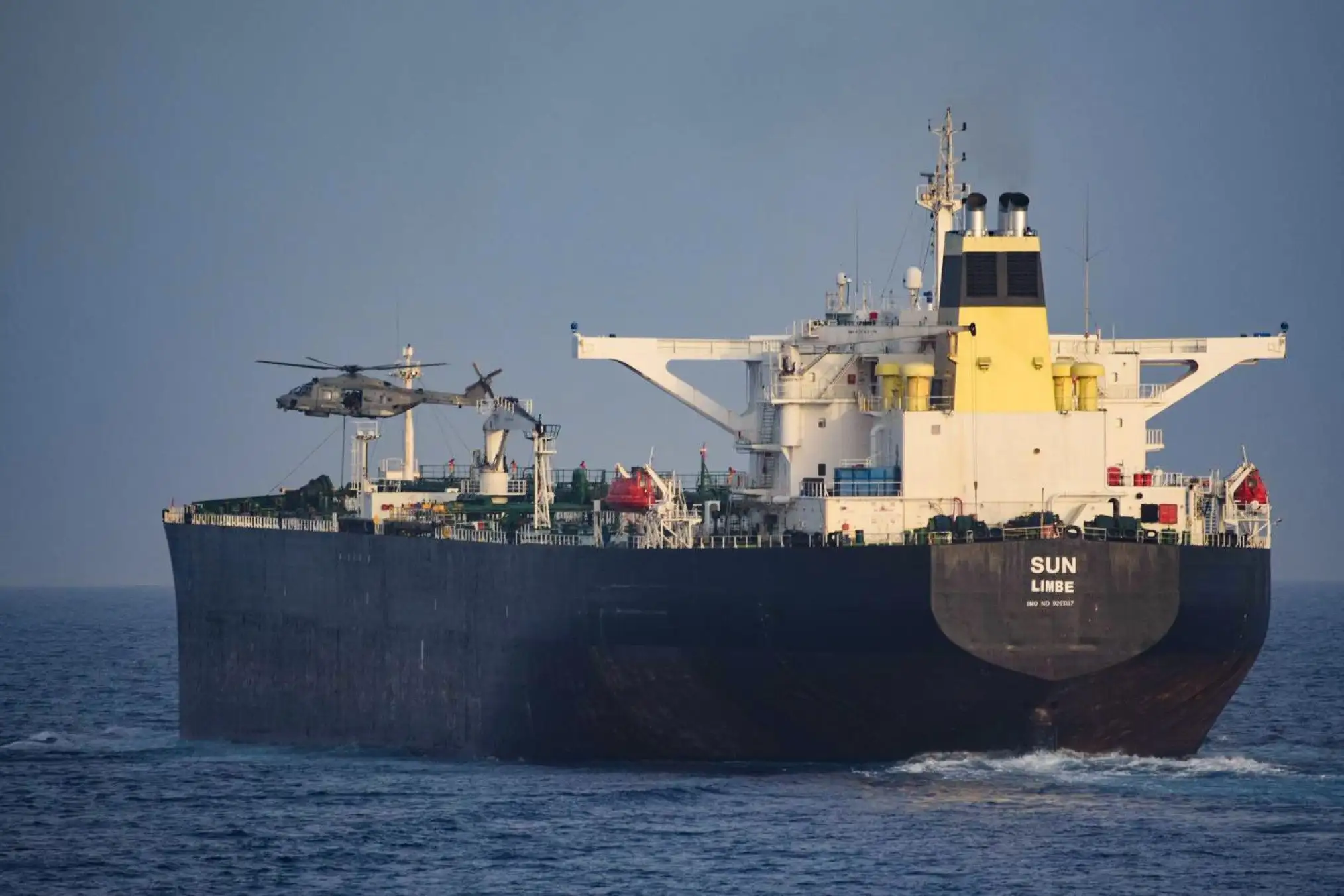
EUNAVFOR MED IRINI forces boarded MV Sun in the Mediterranean to verify its flag, but the vessel was not officially seized or detained
European Union naval forces boarded the oil tanker MV Sun in the Mediterranean on 30 August 2026. The vessel is suspected of using a false flag and operating as part of the shadow fleet transporting Russian oil.
The inspection was conducted by Italian military personnel serving with EUNAVFOR MED IRINI. Available information indicates that the boarding took place west of the Italian island of Pantelleria. MV Sun was claiming Cameroon registration, but European forces questioned the validity of its flag documents.
The purpose of the operation was to verify whether the tanker was legally entitled to fly its declared flag. The boarding was conducted under Article 110 of the United Nations Convention on the Law of the Sea, which permits a warship to visit a foreign vessel on the high seas when there are reasonable grounds to suspect that it is stateless or falsely claiming nationality.
The operation should be described as a boarding or flag-verification inspection rather than a seizure. European authorities have not announced the detention of MV Sun, confiscation of its cargo or transfer of the vessel to national law-enforcement authorities.
The tanker reportedly continued westward through the Mediterranean after the inspection. No official information has been released about its cargo, previous loading port or any violations established during the boarding.
EUNAVFOR MED IRINI can collect documents and other evidence for subsequent examination by competent EU national authorities. The mission itself, however, does not always have the authority to seize an inspected vessel. Detention normally requires a separate national decision supported by sufficient legal grounds.
A similar situation occurred during the August boarding of Toa Payoh. Despite EU sanctions and questions surrounding its recently declared Cameroon registration, IRINI forces carried out a document inspection rather than detaining the tanker.
EU foreign policy chief Kaja Kallas described MV Sun as the sixth vessel suspected of involvement in Russia’s shadow fleet to be boarded by European operations in recent months.
“Illegal oil sales from shadow fleet ships are a critical lifeline for Russia’s war in Ukraine, and we’ll continue to cut them off,” Kaja Kallas said
She stated that the tanker was suspected of sailing under a false flag in breach of international maritime law. In July, IRINI inspected MV South Star, followed by the boarding of Toa Payoh in August. Italian personnel from the operation’s flagship, ITS Thaon di Revel, also participated in the earlier operation.
IRINI said its personnel conducted the MV Sun flag-verification boarding during maritime surveillance activities and in compliance with Article 110 of UNCLOS.
IRINI expands shadow fleet monitoring
EUNAVFOR MED IRINI was established in 2020 primarily to enforce the United Nations arms embargo on Libya. European naval operations have subsequently expanded their contribution to monitoring vessels associated with sanctions evasion and opaque oil trading.
According to European External Action Service documents, IRINI monitors approximately 30 suspected shadow fleet vessels on an average day. Information collected by the operation can support proposals to add tankers, owners and management companies to EU sanctions lists.
The European approach focuses particularly on stateless ships and vessels suspected of using invalid registration documents. A false flag provides a clearer legal basis for boarding on the high seas than the mere suspicion that a vessel has carried Russian oil.
Shadow fleet tankers frequently change names, registered owners, managers and flags. Some continue using documents issued by registries that have already removed them, while others claim nationality without confirmation from the relevant flag state.
If registration cannot be verified, the vessel may effectively be considered stateless. This reduces the protection normally provided by freedom of navigation and creates grounds for inspection under international maritime law.
Established violations can also result in denial of port entry, loss of insurance, blocked payments and restricted access to technical services. Even without an immediate seizure, a boarding increases legal and commercial risks for the owner, charterer and cargo buyer.
Russia assembled a network of tankers with opaque ownership structures to maintain oil exports after Western sanctions were imposed in response to its full-scale aggression against Ukraine. Many of these vessels operate outside traditional Western insurance, financing and technical-control systems.
More frequent Mediterranean inspections may cause operators to change routes, repeatedly re-register ships or rely more heavily on ship-to-ship oil transfers. Such practices increase voyage duration, freight costs and environmental risks.
For ports, insurers, banks and maritime service providers, the MV Sun operation reinforces the need to verify flag registration, name changes, ownership structures and voyage histories. Inadequate due diligence can create sanctions exposure even when there is no direct contract with a Russian company.
Further action against the shadow fleet is due to be discussed by EU defence ministers in Ireland on 1 September. The talks could lead to closer intelligence sharing and additional inspections, although every detention will still require a specific legal basis.
Read also: Germany Halts Seizure of Eventin and 99,000 Tonnes of Oil Pending Court Ruling
