

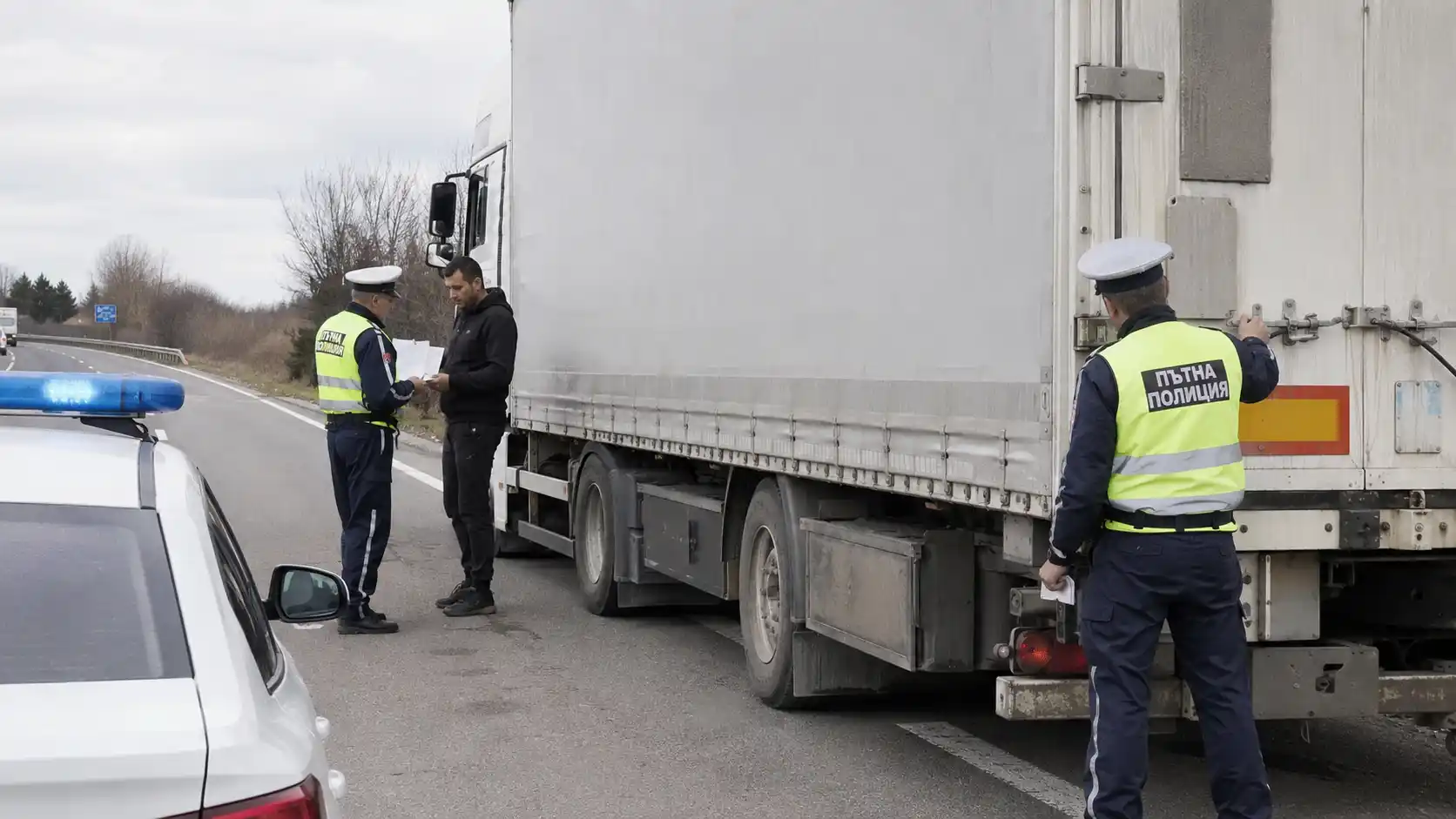
New roadside control locations will be established along major inland routes, with inspections focused on freight operations presenting higher risks of smuggling, illegal migration and excise violations
Six Authorities Agree on Coordinated Enforcement
Bulgaria has held its first coordination meeting involving the heads of the main public authorities responsible for controlling road freight. The agencies agreed to increase the number of locations used for joint truck inspections and strengthen information exchange.
According to the Bulgarian Customs Agency, the August 19 meeting brought together representatives of six authorities:
- the Customs Agency;
- the National Revenue Agency;
- the General Directorate Border Police;
- the National Toll Administration;
- the Executive Agency Automobile Administration;
- the Bulgarian Food Safety Agency.
Each authority will participate within its legal responsibilities, allowing customs, tax, transport, migration and food-safety requirements to be examined during coordinated inspections.
Freight Controls Move to Inland Routes
The expansion follows Bulgaria’s full integration into the Schengen area. Internal air and sea border checks were removed on March 31, 2024, while checks on persons at internal land borders ended on January 1, 2025, under a decision published by the Council of the European Union.
Removing systematic internal border checks does not prevent customs, police or transport authorities from conducting mobile inspections inside the country. As former checkpoints on Bulgaria’s borders with other Schengen states became regular crossing points, part of the supervision of freight flows moved to major inland roads.
The authorities now plan to increase the number of suitable locations where heavy goods vehicles can be stopped safely. The exact number, location and timetable for the additional control points have not yet been disclosed.
Inspections Will Focus on High-Risk Freight
The joint controls are expected to use risk-based selection rather than subjecting every truck to the same procedure. Priority areas include:
- illegal migration;
- smuggling;
- excise-goods violations;
- tax evasion;
- shadow-market activity;
- breaches of road transport and customs requirements;
- food-safety violations.
The measures may apply to goods originating in EU member states, arriving from third countries or moving through Bulgaria in transit.
Depending on which authorities take part, drivers may be asked to provide transport permits, consignment records, commercial documents and information about the cargo’s origin and destination. Inspectors may also verify toll payments, international road transport compliance and sanitary requirements for regulated products.
Authorities Promise to Limit Delays
The Bulgarian administration says that a larger number of inspections should not automatically result in longer stops for all hauliers. The objective is to identify higher-risk operations while allowing compliant companies to continue their journeys with minimal disruption.
“Coordination should provide more comprehensive control and save time for compliant operators without obstructing vehicle traffic,” the Customs Agency said
The participating authorities are expected to coordinate inspection locations, exchange information and reduce unnecessary duplication between agencies.
What International Hauliers Should Expect
International truck operators should expect a greater probability of being stopped inside Bulgaria, including on major routes away from former border-control areas.
Before entering the country, carriers should verify their transport and commercial documents, permits, cargo declarations and toll-payment status. Operators carrying excise goods, food products or consignments originating outside the EU may face more extensive checks under customs and sanitary legislation.
The new approach does not restore Bulgaria’s former internal Schengen border controls. Instead, it creates a more distributed enforcement model in which inland inspections are coordinated across several agencies and targeted primarily at identified risks.
Read also: Bulgaria Uses Toll Cameras to Police Truck Overtaking
