

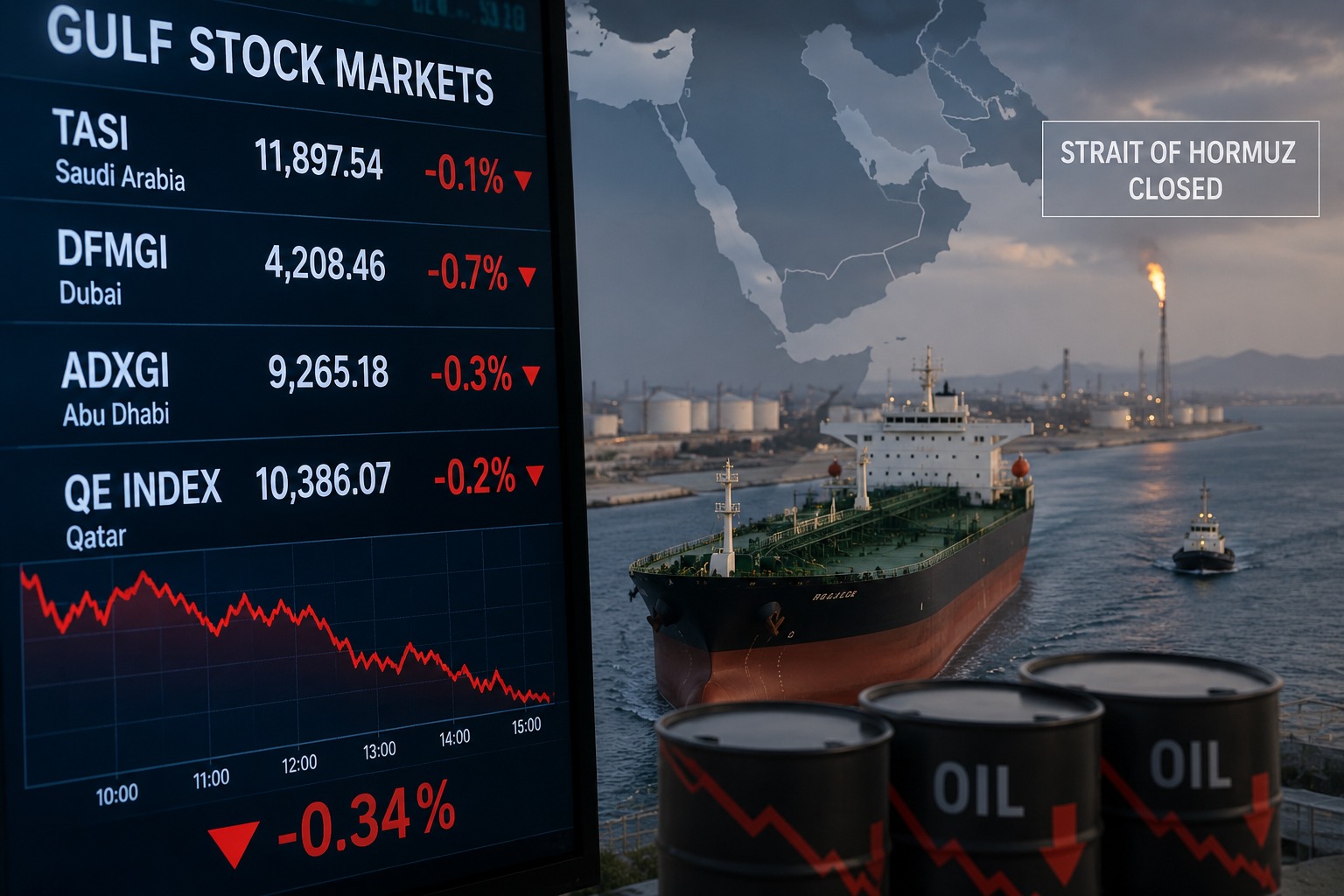
Stock markets across the Gulf region closed lower on June 11 following a new escalation in military tensions between the United States and Iran, as well as the continued closure of the Strait of Hormuz — one of the world’s most critical maritime corridors for energy trade.
Saudi Arabia’s benchmark index fell by 0.1%, Dubai’s main index declined by 0.7%, Abu Dhabi’s market dropped by 0.3%, while Qatar’s index lost 0.2%.
Although the declines were relatively modest, market analysts view the reaction as a clear sign of growing investor concern over the potential for further escalation in the region.
The Strait of Hormuz Remains the Primary Risk Factor
Investor attention remains focused on developments surrounding the Strait of Hormuz, through which a substantial share of global crude oil and liquefied natural gas (LNG) shipments normally pass.
The closure of the waterway has already disrupted maritime transportation, increased marine insurance premiums, and forced shipping companies to alter established trade routes throughout the region.
Oil Prices Rise on Supply Disruption Concerns
At the same time that equity markets weakened, oil prices continued their upward trajectory.
Brent crude climbed to $93.18 per barrel, reflecting growing concerns among traders that escalating tensions could disrupt energy exports from the Gulf, one of the world’s most important oil-producing regions.
Higher oil prices may boost government revenues across oil-exporting countries, but rising geopolitical risks also tend to reduce investment activity and increase market volatility.
Investors Shift Toward Safe-Haven Assets
Periods of military instability typically trigger a flight to safety among global investors.
In response to recent developments, investors have increased allocations to traditionally defensive assets, including government bonds, gold, safe-haven currencies, and short-term cash instruments.
This trend reflects growing caution among institutional investors and large investment funds.
Aviation and Logistics Sectors Face Additional Pressure
Particular attention is being paid to transportation and logistics companies, which are among the sectors most exposed to regional disruptions.
Restrictions on shipping through the Strait of Hormuz have already increased costs associated with ocean freight, vessel insurance, air cargo operations, fuel, and warehousing services.
For international carriers, these developments are placing pressure on profit margins and forcing a reassessment of global supply chain strategies.
Gulf Economies Remain Fundamentally Strong
Despite the recent market weakness, the underlying economic fundamentals of most Gulf Cooperation Council (GCC) countries remain relatively strong.
High energy revenues over recent years have enabled Saudi Arabia, the United Arab Emirates, and Qatar to build substantial financial reserves while continuing to invest in major infrastructure and economic development projects.
Governments across the region are also actively pursuing economic diversification strategies, with significant investments in logistics, manufacturing, tourism, technology, and renewable energy.
What It Means for Businesses
For international businesses, the greatest risk remains uncertainty surrounding the future of shipping operations through the Strait of Hormuz.
If restrictions remain in place for an extended period, companies may face higher transportation costs, rising cargo insurance premiums, shortages of available vessel capacity, longer delivery times, and increased energy expenses.
At present, Gulf financial markets are demonstrating caution rather than panic. However, future market performance will largely depend on whether the parties involved can avoid a broader conflict and restore stability to one of the world’s most strategically important transportation corridors.
