

Company Secures Construction Permit
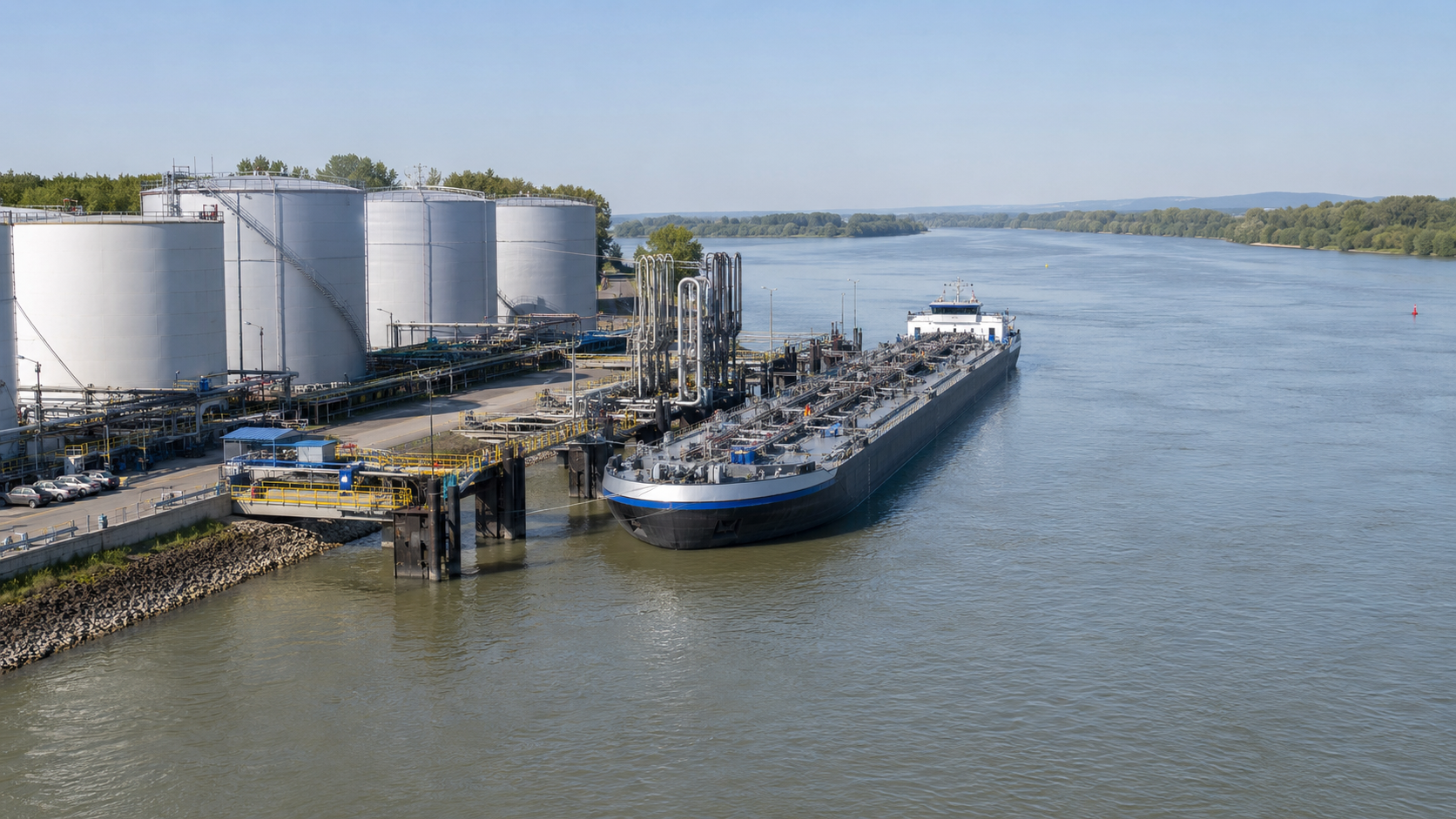
Romanian fuel distributor JT Grup Oil has obtained a permit to build a petroleum products terminal in the Tișovița–Dubova port area on the Danube. The facility will be located near Orșova in Mehedinți County, southwestern Romania.
According to the company’s disclosure on the Bucharest Stock Exchange, the project will include four above-ground storage tanks for liquid fuels. Technical installations and supporting infrastructure required for storage and terminal operations will also be constructed.
JT Grup Oil has not yet disclosed the tanks’ combined capacity, the investment value or the planned commissioning date for the Danube terminal.
Two Terminals Will Form an Integrated Platform
The Orșova-area facility is intended to become part of an integrated logistics system together with JT Grup Oil’s terminal at the Port of Constanța. This arrangement will allow the company to combine Black Sea imports with inland shipping along the Danube.
The Constanța facility was developed by JT Terminal Constanța, a wholly owned subsidiary of JT Grup Oil. The project represents an investment of 150 million Romanian lei.
Technological testing has been completed, and the company expects commercial operations to begin in October 2026 after the remaining formalities and regulatory approvals are finalised.
Platform Targets Five National Markets
The combined terminal network is designed to serve Romania, Hungary, Serbia, Austria and Ukraine. Constanța will provide access to seaborne petroleum products, while the terminal near Orșova will support their onward movement through the Danube corridor.
Orșova is located on the Danube close to Romania’s border with Serbia. This gives the planned terminal the potential to operate as a distribution point for Central and Southeastern European markets.
Ukraine is also included among the company’s target destinations. However, JT Grup Oil has not published specific delivery routes, expected volumes or agreements with Ukrainian customers.
Danube Access Will Expand Fuel Delivery Options
The two-terminal model will allow JT Grup Oil to combine maritime, river, rail and road transport. Petroleum products could enter through Constanța and then be distributed across Romania and neighbouring markets using the Danube and land-based networks.
The strategy could improve supply-chain flexibility, although the performance of river transport will remain dependent on navigation conditions. Low water levels on the Danube can restrict tanker-barge loads, raise freight costs and force operators to shift part of the cargo to rail or road transport.
Read also: Rhine Navigation Gauge Falls to 12 cm as Cargo Traffic Nearly Stops