

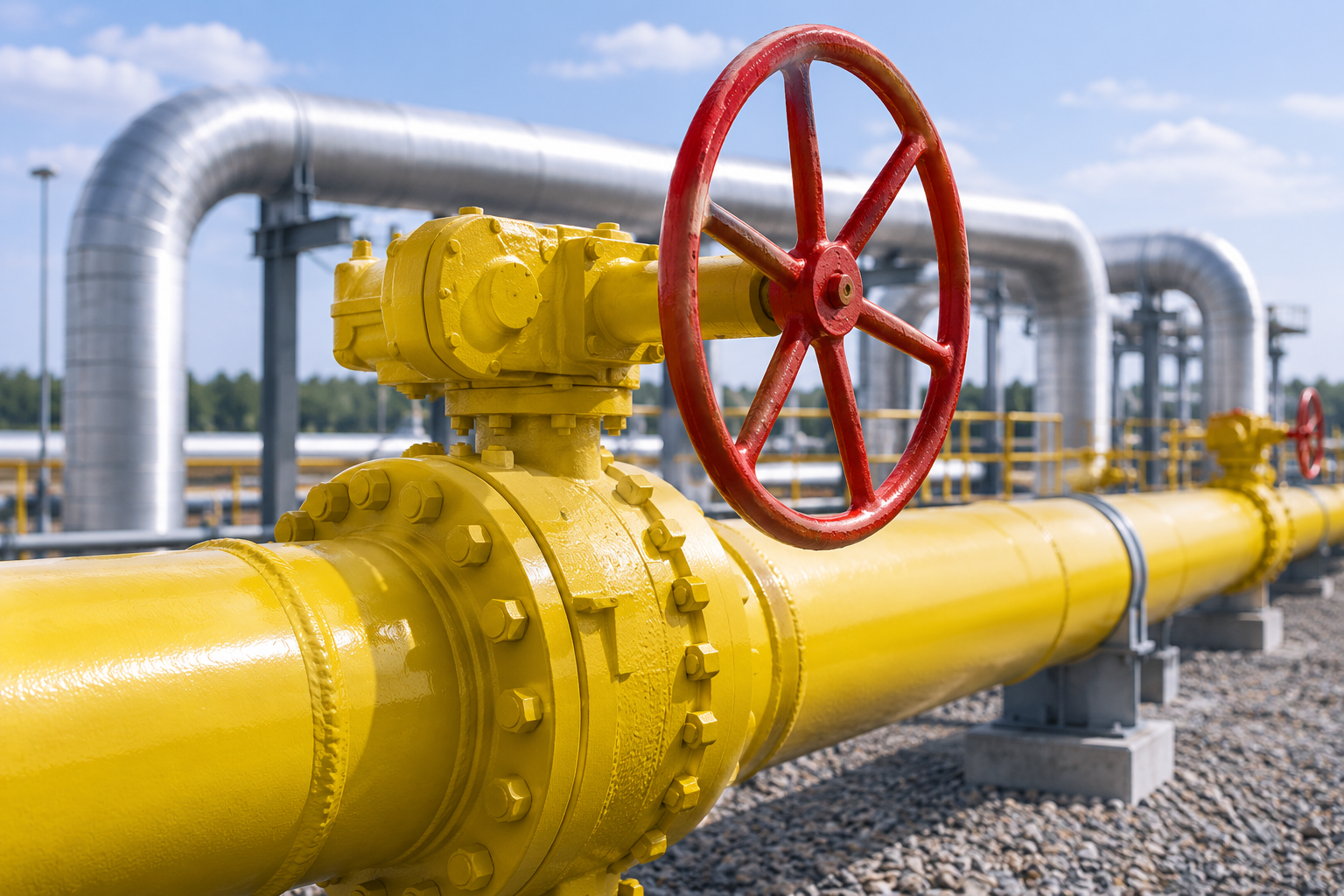
Slovakia Is Looking for a Post-2027 Gas Supplier
Slovakia is seeking a long-term agreement for natural gas supplies from Azerbaijan. Bratislava is considering contracts lasting five or ten years and expects to purchase approximately 1.2 billion cubic metres annually.
Deliveries would begin after 2027, when Slovakia plans to stop importing Russian gas. The negotiations involve Azerbaijan’s state energy company SOCAR, Slovak energy group SPP and government representatives from both countries.
Slovak Economy Minister Denisa Saková said Azerbaijan was offering long-term agreements to several European Union member states. Baku needs such commitments to attract investment in new fields, production expansion and additional export infrastructure.
The proposed volume would not make Azerbaijan Slovakia’s only gas supplier, but it could become an important component of the country’s new energy supply structure.
A Ten-Year Deal Would Provide Supply Predictability
The duration of the proposed contract is important for both the buyer and the supplier.
Slovakia would be able to secure a defined volume in advance, reduce its dependence on short-term purchases and limit exposure to sudden price fluctuations. Azerbaijan would receive a guaranteed market needed to finance additional production.
Developing gas fields, building compressor stations and expanding pipelines require major long-term investments. Producers therefore need firm commitments from European customers.
A ten-year agreement would also help energy companies plan storage use, pipeline bookings and purchases for future heating seasons.
The contract would nevertheless need to account for possible changes in market prices, European climate policy and gas demand. The parties must determine a pricing formula, volume flexibility and responsibility for under-delivery or failure to take contracted gas.
The Delivery Route Remains the Main Question
Political readiness to conclude an agreement does not mean that the physical delivery arrangement has been finalized.
Azerbaijani gas reaches Europe through the Southern Gas Corridor. It moves through the South Caucasus Pipeline and the Trans-Anatolian Natural Gas Pipeline before entering the Trans Adriatic Pipeline.
TAP carries the gas through Greece and Albania to Italy. Further delivery into Central Europe requires interconnected national networks and cross-border capacity.
Possible routes to Slovakia include connections through Italy and Austria or through the Balkan region. The final arrangement will depend on available capacity, transmission tariffs and the ability to reserve pipeline space for a long period.
Slovak officials acknowledge that the route and commercial mechanism still require further negotiation. The gas could physically travel along a defined corridor or be delivered through commercial swaps within the interconnected European market.
Pilot Supplies Began in 2024
Cooperation between SOCAR and Slovakia has already passed an initial practical test.
The Azerbaijani company began supplying gas to Slovakia on December 1, 2024, under a short-term pilot agreement signed the previous month. The parties did not disclose the volume or financial terms.
The pilot arrangement demonstrated the technical and commercial possibility of supplying Azerbaijani gas to the Slovak market.
Bratislava now wants to move from limited deliveries to a predictable long-term model. The new contract would secure a significantly larger volume after Slovakia ends Russian gas imports.
In December 2025, Azerbaijani President Ilham Aliyev confirmed that the country was prepared to resume or increase deliveries whenever Slovakia required them.
Pellegrini’s Visit Accelerated Energy Negotiations
The proposed contract was one of the central issues during Slovak President Peter Pellegrini’s visit to Azerbaijan on July 14–15, 2026.
The Slovak delegation met Azerbaijani President Ilham Aliyev, government officials and representatives of the energy industry in Shusha and Baku.
The two sides agreed to expand cooperation in energy, infrastructure, logistics, digital technology and industry. A joint economic working group is expected to meet in the autumn.
Pellegrini described Azerbaijan as a key partner in Slovakia’s energy diversification. He also recalled that Baku had offered support when gas transit through Ukraine was halted.
The visit gave Bratislava an opportunity to move from political discussions toward detailed negotiations between SOCAR and Slovakia’s SPP.
Slovakia Is Preparing to End Russian Gas Imports
For many years, Slovakia depended heavily on pipeline gas arriving from the east through Ukraine.
After Ukrainian transit ended, the country had to rely more actively on alternative routes, European storage facilities and imports through neighbouring states.
The next stage is expected to be a complete halt to Russian gas purchases after 2027, in line with the direction of European Union energy policy.
This transition will require several alternative sources rather than a single replacement contract. Slovakia can combine Azerbaijani gas with LNG entering Europe, regional pipeline supplies and withdrawals from underground storage.
Azerbaijani gas could provide a stable base volume, supplemented by purchases from the wider European market.
This approach reduces dependence on one supplier but creates a more complicated transport structure. Gas may cross several national networks, with the final price including multiple transit and capacity charges.
Azerbaijan Needs Guarantees to Expand Production
Baku wants to increase its European exports, but additional volumes cannot become available immediately.
New supplies require higher production from existing fields, the development of additional projects and greater pipeline capacity.
The Shah Deniz field remains Azerbaijan’s main source of export gas. Further potential is associated with Absheron and other Caspian projects.
In the first half of 2026, Azerbaijan produced 25.4 bcm of natural gas and exported 12.7 bcm. Europe received 5.9 bcm, Türkiye 4.9 bcm, Georgia 1.2 bcm and Syria 0.7 bcm.
The 1.2 bcm requested by Slovakia would therefore represent a significant share of Azerbaijan’s current European exports.
To supply this amount without reducing deliveries to other buyers, Azerbaijan will need to increase production or restructure its export portfolio.
Azerbaijan Now Supplies Gas to 16 Countries
The geographical reach of Azerbaijani gas exports continues to expand.
In early 2026, SOCAR began deliveries to Austria and Germany through Italy. These markets increased the total number of importing countries to 16.
Azerbaijan’s European portfolio includes Italy, Greece, Bulgaria, Romania, Hungary, Serbia, Slovenia, Croatia, Slovakia, North Macedonia, Germany, Ukraine and Austria.
Baku is also negotiating with other EU member states about starting deliveries or increasing existing volumes.
The expansion of energy exports forms part of a broader strategy under which Azerbaijan is strengthening its economic links with European markets and developing its role as an energy and transport hub between the Caspian region and Europe.
Germany Has Already Signed a Ten-Year Contract
Azerbaijan’s agreement with Germany demonstrates that the long-term model is already being used.
SOCAR signed a ten-year contract with German energy company SEFE for supplies of up to 1.5 bcm annually.
The arrangement may become a reference point for negotiations with Slovakia. Both countries are Central European markets seeking to diversify imports and secure long-term volumes.
The German contract also shows that Azerbaijan prefers customers willing to provide firm demand guarantees. Without such commitments, financing additional production and pipeline capacity becomes more difficult.
The Slovak volume will nevertheless depend on route availability. Germany and Austria can receive gas through Italy and connected European networks, while delivery to Slovakia requires additional cross-border capacity.
Pipeline Capacity Will Need to Increase
The capacity of the Southern Gas Corridor remains one of the main limitations.
The system already serves several European countries. Connecting new buyers and increasing deliveries to existing customers will place further pressure on the route.
Expanding TAP and other sections requires coordinated investment by pipeline operators, producers and buyers. Even when Azerbaijan produces more gas, the additional volume must still be physically transported to Europe.
Infrastructure projects are normally approved only when customers demonstrate firm demand. This explains why Baku is seeking agreements lasting five or ten years.
For Slovakia, a long-term contract would therefore represent not only a purchase of gas but also support for the creation of new export capacity.
Final Cost Will Depend on the Transport Model
The competitiveness of Azerbaijani gas in Slovakia will not be determined only by its price at the point of production.
The final cost will include Southern Gas Corridor tariffs, transportation through Italy or the Balkans, national transmission fees and cross-border capacity reservations.
The larger the number of operators involved, the more difficult it becomes to coordinate terms for an entire decade.
Slovakia must also compare SOCAR’s offer with LNG, Norwegian supplies and purchases on European trading hubs.
A long-term contract may be cheaper than spot-market gas during periods of shortage but more expensive when market prices fall.
The pricing formula is therefore likely to include links to European gas indices and provisions for periodic review.
The Deal Would Strengthen Central Europe’s Energy Role
Supplies to Slovakia would expand Azerbaijan’s presence in Central Europe.
The region was historically connected to Russian gas arriving from the east. Changes in European energy flows are forcing Slovakia, Austria, Hungary and neighbouring countries to rebuild their supply systems.
New routes increasingly run from the south and west, changing the direction of pipeline flows and the importance of individual gas hubs.
Slovakia has large underground storage facilities and several cross-border connections. It can therefore receive gas for domestic consumption while also participating in regional distribution.
A SOCAR contract could make Azerbaijani gas part of a wider Central European supply system rather than a purely bilateral flow.
Bratislava Is Offering Technology and Industrial Cooperation
Slovakia views its relations with Azerbaijan as broader than a simple energy purchase.
Denisa Saková said the country was prepared to provide technology, expertise and industrial experience. Potential areas include energy equipment, infrastructure, digital solutions and production efficiency.
This approach would allow Slovakia to partly balance gas imports through exports of equipment and services.
Azerbaijan would gain access to European technologies needed to modernize its energy sector and expand production capacity.
The two countries also discussed transport, logistics and a proposed electricity corridor connecting Central Asia and Azerbaijan with Europe.
These projects complement Azerbaijan’s increasing role as a transit hub. K2Cargo.News previously reported that Azerbaijan plans to double cargo transit volumes along routes linking Asia, the Caucasus and European markets.
The Contract Would Become Part of Europe’s New Energy System
The proposed purchase of 1.2 bcm annually will not replace Slovakia’s entire former import system. It could nevertheless become one of the main elements of diversification after 2027.
For Bratislava, a ten-year deal would secure a predictable volume during the phase-out of Russian gas. For Baku, it would provide guaranteed demand needed to support new investment.
The main unresolved issues are the delivery route, transportation cost, pipeline availability and the timing of additional production.
If the parties agree on these conditions, Slovakia could become one of the most significant buyers of Azerbaijani gas in Central Europe.
The agreement would also confirm Europe’s transition from a model dominated by large eastern pipeline flows toward a more distributed system based on the Southern Gas Corridor, LNG terminals, Norwegian supplies and cross-border interconnectors.
Read also: Azerbaijan Strengthens Economic Links with European Markets
