

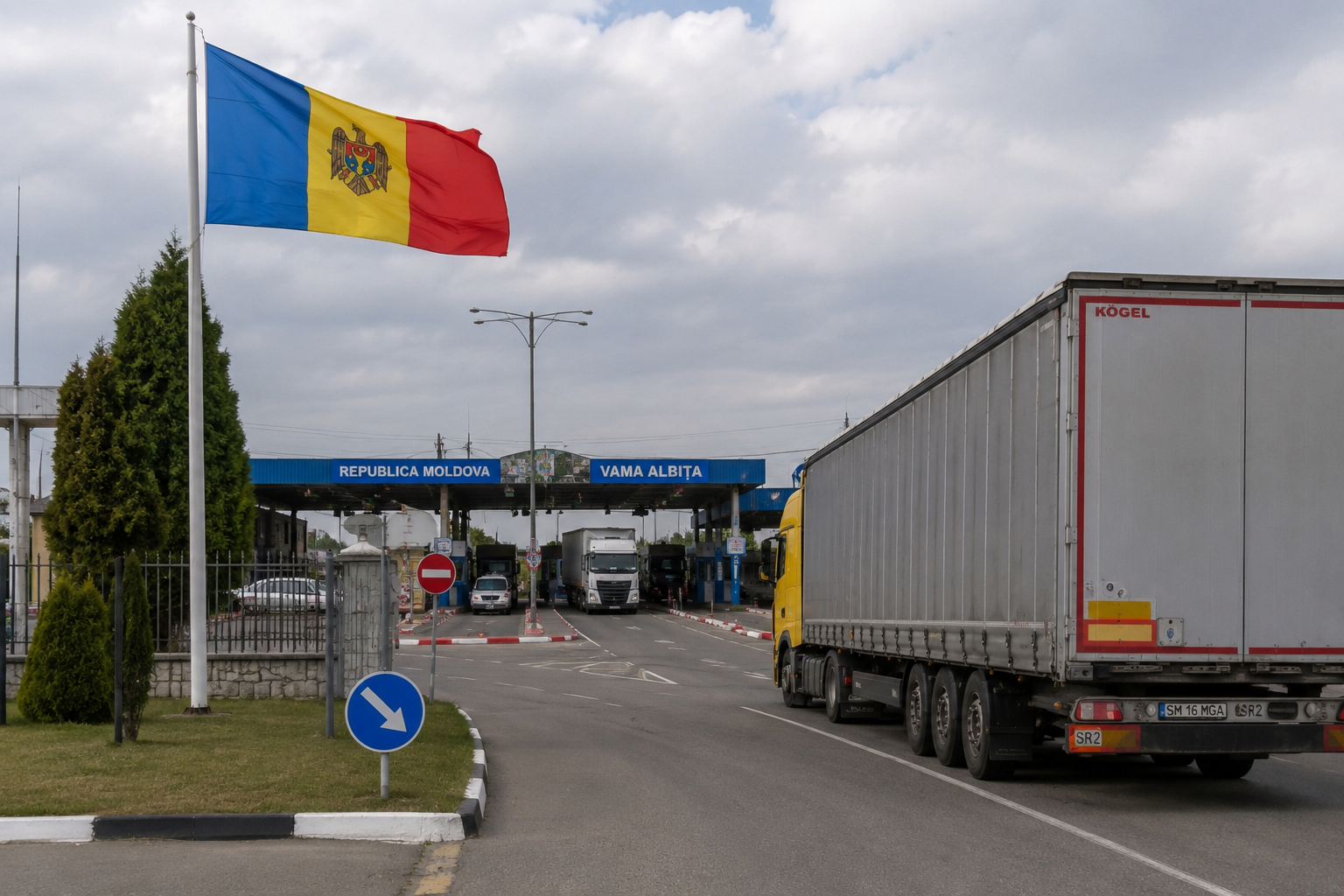
Moldova is moving forward with comprehensive reforms to its road freight regulations as part of its broader European integration strategy. The Ministry of Infrastructure and Regional Development has submitted a new draft law to Parliament for its first reading, introducing a unified regulatory framework for heavy goods vehicles operating on the country’s public road network.
The government says the reforms are designed to improve legal certainty for transport operators, reduce disputes during roadside inspections, and bring Moldova’s transport legislation closer to EU requirements.
Unified Rules for Heavy Vehicles
One of the central elements of the reform is the introduction of a single set of maximum weight and dimension limits for freight vehicles.
Currently, Moldova applies different restrictions depending on the category of road, with separate requirements for modernized, non-modernized, and gravel roads. Under the proposed legislation, these varying rules would be replaced by a unified national system.
According to the Ministry, standardized regulations will simplify route planning for transport companies, reduce administrative burdens, and minimize inconsistent interpretation of the rules during roadside inspections.
TEN-T to Become Part of National Legislation
Another significant provision of the draft law is the formal incorporation of the Trans-European Transport Network (TEN-T) into Moldova’s legal framework.
TEN-T forms the backbone of Europe’s strategic transport corridors, connecting major logistics hubs, ports, and international freight routes across the European Union.
Under the reform, roads that are part of the TEN-T network will receive a separate classification within Moldova’s national road system. The government views this step as an important milestone in the country’s gradual integration into the European transport market.
New Powers for Road Authorities
The proposed legislation also introduces changes to the management of roadside infrastructure.
Road authorities would receive expanded powers to address unauthorized access points connecting private properties or local roads to public highways. Where necessary, illegal or unsafe access roads could be removed or reconstructed, particularly when they interfere with road modernization projects or create safety risks.
According to the government, these measures are intended to improve road safety while supporting the long-term development of Moldova’s transport infrastructure.
Most provisions of the new law are expected to enter into force immediately after publication in the country’s Official Gazette. However, the new maximum weight and dimension standards for heavy vehicles will only become applicable once Moldova officially joins the European Union.
Industry experts note that harmonizing transport legislation with EU regulations represents another important step toward Moldova’s integration into the European logistics network. For international freight operators, the reforms are expected to provide mo-хre predictable operating conditions, reduce administrative barriers, and facilitate cross-border road transport.
Read also: Ukraine Upgrades Four Border Crossings with Moldova
