

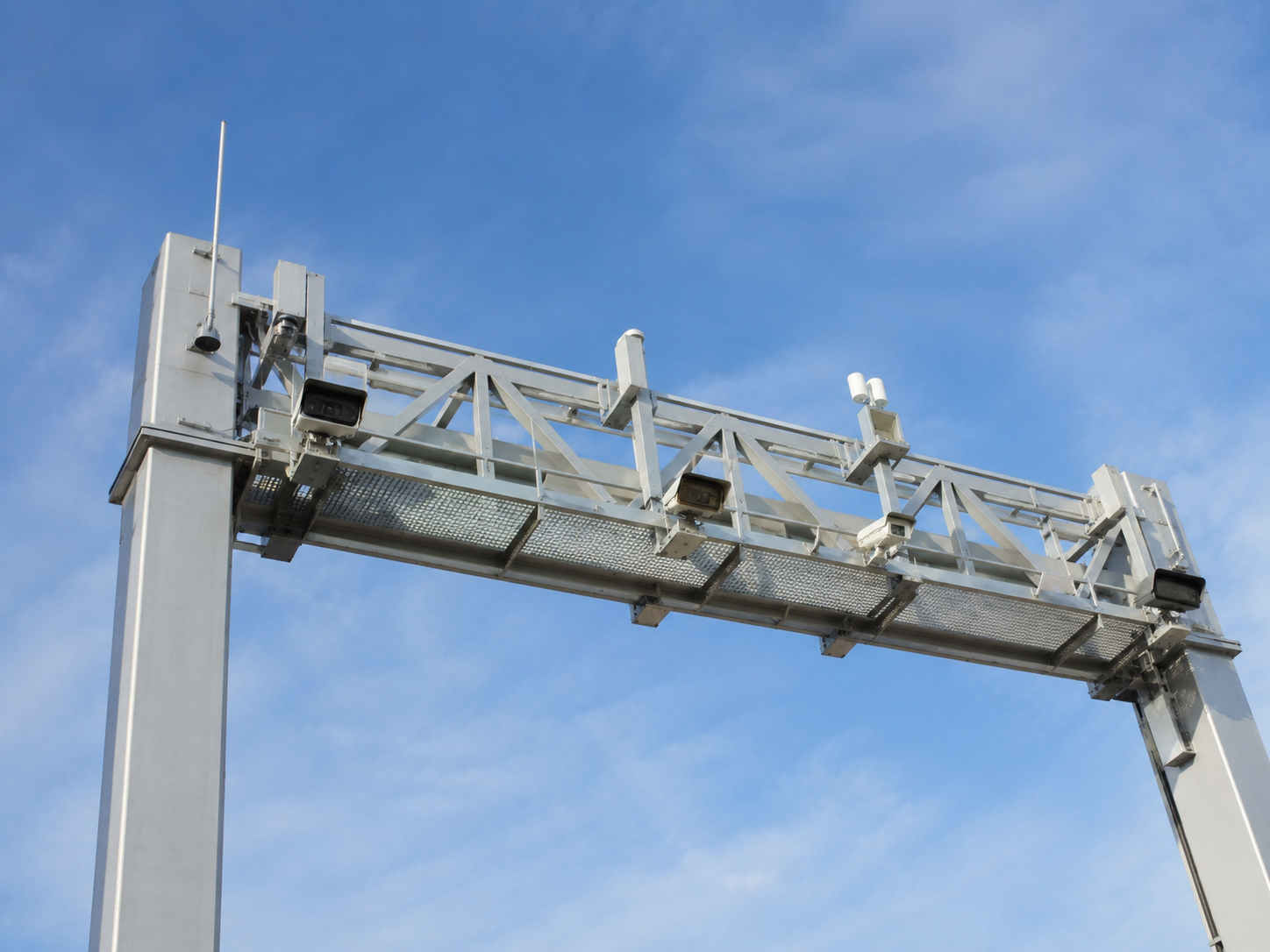
Bulgaria has begun using its electronic toll infrastructure to detect heavy trucks that enter the overtaking lane on motorway sections where such manoeuvres are banned. The new mechanism came into force on July 1, 2026, and initially applies to 15 road sections equipped with toll enforcement cameras and special traffic signs prohibiting truck overtaking.
The region in question is Bulgaria, a key road freight transit country in Southeastern Europe and the Balkans. The measure is especially important because Bulgarian motorways are used by international carriers moving between Türkiye, Romania, Serbia, Greece and the wider European Union.
Under the new system, cameras installed on toll gantries automatically record violations involving trucks where overtaking is prohibited. The evidence file includes vehicle images, the date and time of the incident, location, lane used, vehicle category, licence plate data and speed. The collected evidence is then transferred to the Bulgarian Interior Ministry for enforcement, allowing fines to be issued remotely.
The move reflects a growing trend across Europe: road authorities are no longer relying only on roadside police checks. Instead, they are integrating digital tolling systems, automatic number plate recognition and traffic monitoring tools into daily enforcement.
As K2Cargo News recently reported in “Europe Introduces Summer Truck Driving Restrictions for 2026”, European countries are tightening rules for heavy goods vehicles during the peak summer season. Bulgaria’s new camera-based overtaking control fits into the same wider effort to improve traffic flow and road safety.
Bulgaria Targets Motorway Overtaking Violations
The new functionality is based on Bulgaria’s existing electronic toll collection and enforcement system. Until now, toll cameras were primarily associated with payment control, vehicle classification and other road-use compliance checks. From July, they are also being used to monitor truck behaviour in restricted overtaking zones.
The system applies where traffic sign B25 prohibits heavy goods vehicles from using the overtaking lane. In practice, this means that if a truck enters the left lane on a restricted section, the system can automatically generate an evidence package.
This is a significant change for drivers and transport companies. A violation no longer needs to be observed directly by a traffic police unit. If the camera system captures the manoeuvre and the evidence is validated, enforcement can follow remotely.
For international carriers, the message is clear: motorway restrictions in Bulgaria can no longer be treated as rules that are enforced only occasionally. Digital monitoring makes compliance more systematic and predictable.
Fifteen Sections Are Covered Initially
The new mechanism has initially been activated at 15 locations.
Twelve of them are on the Trakia Motorway, known as the A1, in the regions of Stara Zagora, Pazardzhik and Yambol. The remaining three are on the Hemus Motorway, or A2, in Shumen Region.
These are important routes for both domestic and international traffic. The A1 Trakia Motorway connects Sofia with Plovdiv, Stara Zagora, Yambol and the Black Sea direction, while the A2 Hemus Motorway is a major route toward northern and northeastern Bulgaria.
The selected sections are expected to be marked with signs prohibiting overtaking by trucks above the relevant weight category. For drivers, this makes route awareness especially important. The presence of a sign combined with toll enforcement cameras creates a direct compliance risk.
Bulgaria may later expand the system to additional sections if authorities consider the initial phase successful. The toll infrastructure already exists across large parts of the paid road network, which makes further digital enforcement technically easier than building a separate monitoring system from scratch.
Why Overtaking by Trucks Is a Safety Issue
Truck overtaking on busy motorway sections can create serious traffic risks.
Heavy goods vehicles accelerate more slowly than passenger cars, especially on gradients or during heavy traffic. When a truck moves into the overtaking lane and remains there for a long time, faster vehicles behind it may be forced to brake sharply. This increases the risk of sudden slowdowns, congestion and rear-end collisions.
The problem becomes more visible during the summer season. Motorways carry more private cars, tourist traffic and long-distance freight, while temperatures and congestion place additional pressure on drivers.
Authorities argue that limiting truck overtaking on selected sections can improve traffic organization and reduce hazardous manoeuvres. The goal is not to ban overtaking everywhere, but to enforce restrictions where road design, traffic density or safety conditions make such manoeuvres problematic.
For professional drivers, this means that compliance with lane restrictions is becoming part of operational discipline, just like speed limits, toll payments and driving time rules.
Digital Enforcement Changes Carrier Risk
For transport companies, Bulgaria’s new system changes the risk profile of violations.
Previously, some lane-use offences depended heavily on the presence of roadside police patrols. Now, enforcement can be linked to fixed infrastructure that works continuously. This increases the likelihood that repeated violations will be recorded.
Fleet managers will need to communicate the new rules clearly to drivers, especially those operating international routes through Bulgaria. Route planning should include not only toll costs and rest periods, but also sections where truck overtaking is prohibited.
The financial impact of one fine may be limited, but repeated violations can create administrative costs, driver disputes and reputational problems. For companies operating large fleets, automated enforcement also means that compliance failures may accumulate quickly if drivers are not properly informed.
This is part of a wider shift in European road transport regulation. As K2Cargo News reported in “Romania to Ban Truck Drivers from Loading and Unloading Cargo Themselves”, authorities across the region are paying more attention not only to vehicle movement, but also to driver safety, working conditions and operational discipline.
Europe Is Moving Toward Smarter Road Control
Bulgaria is not acting in isolation.
Across Europe, transport authorities are increasingly using digital systems to enforce road rules. Toll gantries, speed cameras, average-speed sections, smart tachographs and automated number plate recognition are gradually changing how compliance is monitored.
For hauliers, this means that enforcement is becoming less dependent on random inspections and more dependent on data. A truck can be checked without being stopped, and violations can be processed through digital evidence files.
Similar debates are taking place in other European countries. Italy, for example, has been testing truck overtaking restrictions on a section of the A1 motorway, where heavy goods vehicles above 12 tonnes were banned from overtaking on a major transit route. Such measures show that European road operators are increasingly focused on the impact of truck overtaking on congestion and safety.
The key question for the industry is how to balance safety with freight efficiency. Overtaking bans can improve traffic flow for passenger vehicles and reduce risky manoeuvres, but they can also create longer convoys of trucks and affect delivery times if applied too broadly.
What This Means for Logistics Companies
Bulgaria’s new camera-based monitoring system is a warning signal for international carriers.
The country is an important transit corridor between the EU, Türkiye and the Balkans. Any new enforcement mechanism on Bulgarian motorways therefore affects not only local fleets, but also transport companies from across Europe.
Logistics operators should review driver instructions for Bulgarian routes, update route-planning systems and ensure that dispatchers know where truck overtaking restrictions apply. Companies using subcontractors should also include these rules in operational briefings.
The change may not transform freight transport costs overnight, but it will increase the importance of compliance. In a market where margins are already under pressure, avoiding preventable fines becomes part of operational efficiency.
The broader lesson is clear: European road transport is entering an era of more automated enforcement. Truck drivers and fleet operators will need to adapt to a system where toll cameras are no longer only collecting road charges, but also monitoring how vehicles behave on the road.
Read also: Europe Introduces Summer Truck Driving Restrictions for 2026
