

Agricultural Market Does Not Expect a Repeat of 2022
Ukrainian farmers and exporters are not showing signs of panic following the temporary halt in new vessel calls at the country’s deepwater Black Sea ports.
The government and private businesses are developing measures intended to keep exports moving until stable maritime operations can be restored.
Agriculture and Food Minister Taras Vysotskyi said the current situation differs fundamentally from the first months of the full-scale war. Ukraine has since expanded its Danube ports, dry terminals on the western border, road and rail corridors into the EU, and its fleet of grain wagons.
Ukraine’s historical record for grain exports without the use of deepwater ports was approximately 3.5 million tonnes per month. The country could theoretically approach that level again, although alternative routes are considerably more expensive than direct maritime shipments through the Greater Odesa ports.
Ports Are Not Officially Closed, but New Calls Have Stopped
The Ukrainian government has not announced the closure of its ports or imposed an administrative ban on navigation through the maritime corridor.
However, shipowners temporarily stopped sending new vessels to collect agricultural cargo after attacks against ports and commercial shipping intensified.
Ukrainian ports were still receiving four or five vessels per day on July 21, but new arrivals had stopped by July 22. The deepwater ports were therefore effectively left without incoming vessels at that point, even though they remained legally open and could continue handling ships already at their berths.
K2Cargo.News previously explained that shipowners had temporarily suspended calls at Ukrainian ports because of risks to vessels, crews and insurance coverage.
The disruption has also affected container transport. Maersk suspended its service through Chornomorsk and rerouted some shipments to the Romanian Port of Constanța.
The Danube and Western Border Remain Available
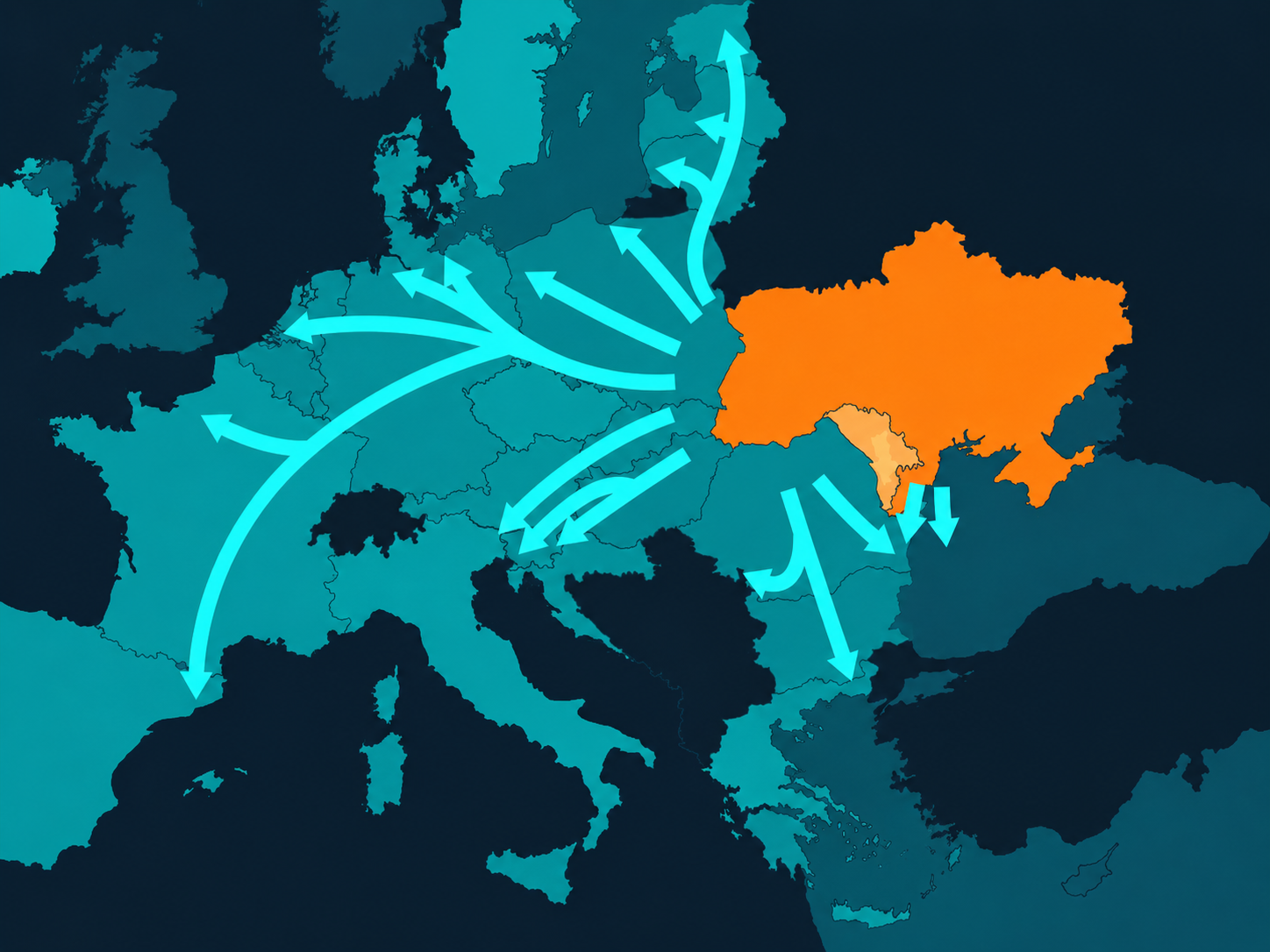
The main alternatives to the deepwater ports are the Danube terminals at Izmail and Reni, railway dry ports, road crossings and seaports in neighbouring EU countries.
Ukraine used these routes extensively in 2022 and 2023 when access to Greater Odesa was restricted. Since then, terminal capacity has increased and logistics companies have gained experience in transferring grain between the Ukrainian and European transport systems.
These routes cannot fully replace deepwater maritime exports. Rail shipments require transshipment or gauge changes, road transport is suitable only for limited volumes, and routing cargo through EU seaports adds distance and handling operations.
Low water levels on the Danube are creating an additional constraint. Reduced vessel draught limits barge loading, while stronger demand has already increased freight rates between the Ukrainian Danube ports and Constanța.
Ukraine May Need Storage for 10–12 Million Tonnes
Ukraine currently has enough capacity to store the expected harvest. The situation could change if maritime export delays continue for several months and grain begins accumulating at elevators.
Vysotskyi said the country could eventually require temporary storage for an additional 10–12 million tonnes of grain. The government plans to request grain storage bags and other temporary facilities from international partners if necessary.
Storage bags can be deployed relatively quickly near farms and elevators. They reduce the risk that producers will be forced to sell immediately after harvesting, when logistics restrictions could place additional pressure on domestic prices.
Temporary storage does not solve the export problem itself. The longer grain remains inside the country, the higher the financing and storage costs become, while capacity must eventually be released for later harvests.
Russia Attacked 28 Civilian Vessels in One Month
The sharp deterioration in maritime security is the main reason for the suspension of new vessel calls.
According to Odesa regional prosecutors, Russian forces attacked 28 civilian vessels between June 20 and July 20, killing 21 people. Port terminals, storage facilities, rail infrastructure and energy systems were also damaged.
Direct attacks on merchant ships have increased risks for owners, charterers and insurers. A port may remain technically operational, but carriers can still refuse to call when war-risk insurance becomes unaffordable or crew safety cannot be guaranteed.
Ukraine has already lost about one-third of its Black Sea grain export capacity. Greater Odesa previously handled around 6 million tonnes of cargo per month, while current grain capacity has been estimated at approximately 4 million tonnes.
Golden Leo Sank, while AGN Ragnar Was Damaged
The deadliest recent incident involved the Guinea-Bissau-flagged cargo ship Golden Leo.
The vessel departed Chornomorsk carrying corn and was struck on July 19 while travelling through the Ukrainian-controlled coastal corridor.
Nine crew members and a Ukrainian maritime pilot were killed, while eight seafarers were rescued. The victims included citizens of India and Syria. The badly damaged vessel sank off Odesa on July 26.
The Palau-flagged AGN Ragnar was struck on July 25. Four Indian nationals were on board: two were confirmed safe and two remained missing. The vessel suffered fire and serious structural damage, but there was no confirmed report that it had sunk at the time of publication.
Golden Leo is therefore the latest confirmed merchant ship to have sunk following an attack near Ukraine. AGN Ragnar remains classified as damaged while search and rescue operations continue.
Black Sea Risks Have Also Affected Russian Export Routes
The escalation is affecting shipping on both sides of the Black Sea.
Russian authorities temporarily introduced nighttime restrictions on vessel movements at Novorossiysk, the country’s largest port by cargo volume and an important gateway for grain and oil exports.
The Caspian Pipeline Consortium also suspended crude intake and loading at its Black Sea terminal for security reasons. Kazakhstan was forced to reduce oil production because more than 80% of its oil exports use the CPC system. Loading operations had resumed by July 27.
The disruptions show that expanding military risks are affecting not only Ukrainian grain shipments but also other major commodity flows across the Black Sea region.
The Market Is Counting on Maritime Exports Resuming
Alternative routes allow Ukraine to continue exporting agricultural products and avoid a complete halt in foreign trade.
However, they cannot deliver the same cost, capacity and efficiency as the deepwater Black Sea ports.
A prolonged suspension could lead to larger grain stocks, lower domestic purchasing prices, higher storage costs and reduced incomes for farmers. It would also increase pressure on the Danube corridor, western border crossings and the Port of Constanța.
The agricultural sector therefore does not view alternative logistics as a permanent replacement for Greater Odesa. Their purpose is to preserve part of the export flow while the government, military, insurers and shipowners work to restore safer navigation.
Read also: Shipowners Suspend Calls at Ukrainian Ports
