

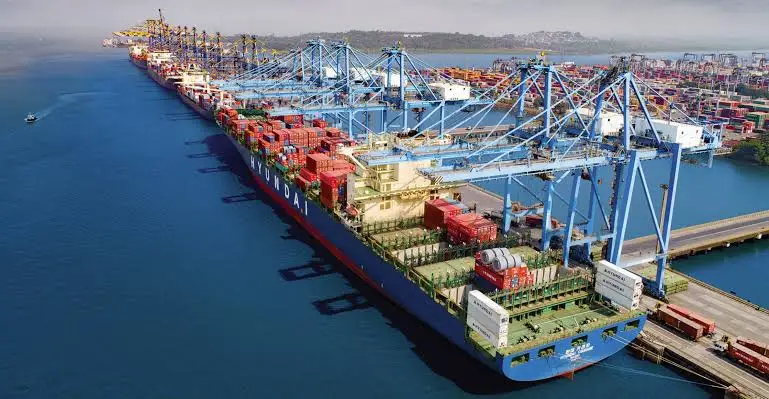
The temporary customs framework covers containerized, liquid bulk, breakbulk and dry bulk shipments disrupted by the Strait of Hormuz crisis
Nationwide Transshipment Access
India has authorized international cargo diverted by shipping disruptions around the Strait of Hormuz to be transshipped through all of the country’s seaports and international airports. The temporary framework will remain in force through October 31, 2026.
The measures are set out in Circular No. 36/2026-Customs, issued by India’s Central Board of Indirect Taxes and Customs on August 20. The decision is intended to maintain international cargo flows amid continuing maritime-security risks and disruption to established Gulf shipping routes.
The authorization covers both full-container-load and less-than-container-load shipments. Cargo may also be routed through more than one Customs station in India where the required approvals and controls are in place.
Bulk Cargo Requires Case-by-Case Approval
Containerized cargo may be handled at all seaports and international airports under the applicable Customs procedures. A separate approval mechanism applies to liquid bulk, breakbulk and solid or dry bulk shipments.
Jurisdictional Principal Commissioners and Commissioners of Customs may authorize the temporary unloading, storage and onward transshipment of these cargoes on a case-by-case basis. Approval may be granted when a vessel bound for a foreign destination is forced to divert to India because of maritime-security concerns, disruption to international shipping routes or other logistical emergencies.
Cargo may be stored in Customs areas, bonded warehouses, bonded tanks, silos, yards and other approved facilities. Such storage is permitted solely for subsequent international transshipment or re-export.
Solid and dry bulk shipments will follow the framework established for breakbulk cargo, with particular attention to weighing, quantity verification and safeguards against unauthorized diversion.
Domestic Release Is Prohibited
The temporary arrangement does not allow diverted cargo to enter the Indian market. Shipments cannot be cleared for domestic consumption or transferred into India’s Domestic Tariff Area.
Cargo must remain under Customs control throughout its stay. Requirements include supervision during unloading, verification of quantities, transfer to an authorized custodian, maintenance of inventory records and submission of an appropriate bond or undertaking.
Customs authorities may permit repacking where operationally necessary. Any such work must be performed in an approved Customs area under official supervision and with complete records of the cargo handled.
Multiple Customs Stations Must Coordinate
Shipments moving through several Indian Customs stations will require prior coordination between designated nodal officers.
The receiving station must confirm that it has sufficient secure storage, suitable infrastructure and the operational capacity to handle and supervise the cargo. Once that confirmation has been received, the originating Customs station may issue the transshipment authorization.
Containers may be sealed where necessary. Custodians at the originating, transit and destination locations will remain responsible for secure storage, handling and accounting, while any damage, discrepancy or irregularity must be reported immediately.
India Has Gradually Expanded the Framework
India introduced its initial relief measures for cargo affected by the West Asia crisis on March 17. On March 27, the authorities extended international transshipment access for FCL and LCL cargo to all Indian seaports and international airports.
A May 14 decision kept the earlier measures in force through June 30. The latest circular extends the framework until October 31 and explicitly brings solid and dry bulk shipments under safeguards previously applied to breakbulk cargo.
For shipping lines, freight forwarders and cargo owners, the measure creates an additional option for temporarily handling rerouted shipments without declaring them as Indian imports. Its practical use will nevertheless depend on available port capacity, appropriate storage infrastructure, prior Customs coordination and continuous regulatory supervision.
Read also: Iran Allows Several Iraqi Oil Tankers to Transit the Strait of Hormuz
