

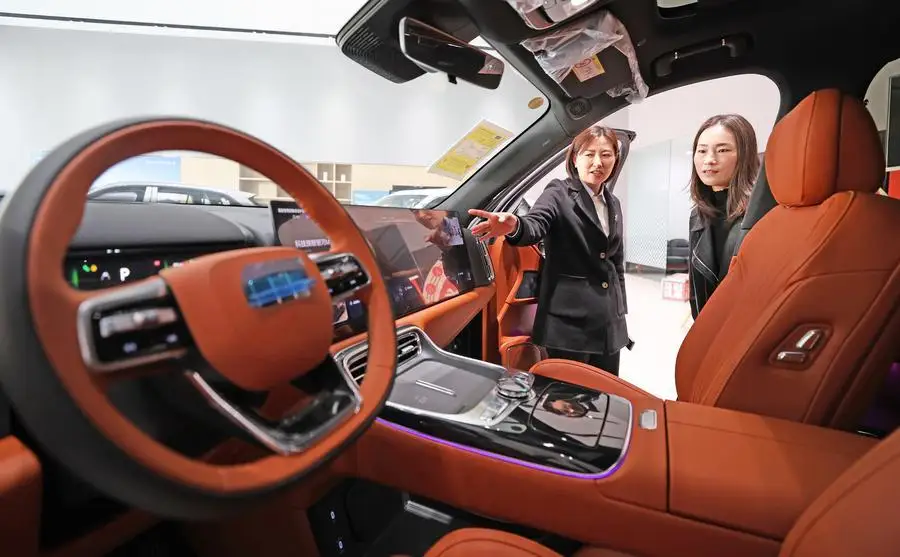
Electric vehicles in China are no longer just an alternative — they are becoming the main choice for buyers. In July, NEVs accounted for 65.1% of new passenger vehicle sales
The share of new energy vehicles (NEVs) in China’s retail passenger vehicle sales reached 65.1% in July. The figure has remained above 60% for four consecutive months, reflecting not only strong demand but also the ability of China’s automotive industry to rapidly scale up new technologies.
According to Xinhua, further growth is expected in August. Retail passenger vehicle sales are projected to reach approximately 1.58 million units, with around 1.04 million of them being NEVs. This would bring the market penetration rate to 65.8%.
One factor behind the growth is lower production costs. Advances in battery technology and new manufacturing solutions are helping reduce expenses, allowing some electric vehicles to compete with gasoline-powered models on price.
Consumer preferences are also changing, with growing attention to smart features such as voice control, digital displays and driver-assistance systems.
At the same time, charging infrastructure is expanding rapidly. By the end of July, China had 23.68 million charging points, up 41.9% from a year earlier.
Another advantage of the industry is the speed of development. Chinese automakers have reduced the development cycle for new models from three to five years to approximately 18 months.
A similar trend can be seen in the battery sector. CATL introduced the first generation of its Shenxing battery in 2023, the second in 2025 and the third in April this year. According to the company, the latest version can charge from 10% to 80% in just 3 minutes and 44 seconds.
Thus, the growth of China’s NEV market is being driven by a combination of mass production, technological development, accessible charging infrastructure and manufacturers’ ability to bring entirely new solutions to market quickly.
China Conducts Maiden Flight of High-Altitude Variant of the C919 Passenger Jet