

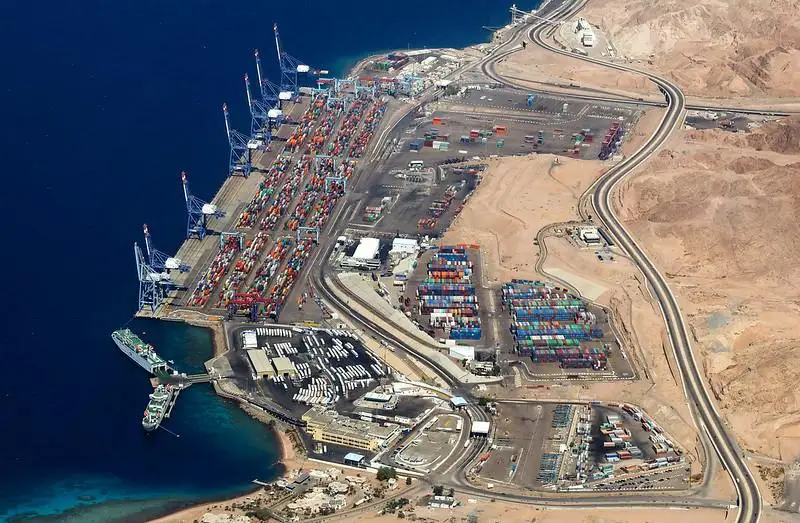
Jordan’s port is emerging as an alternative gateway for Iraq-bound container cargo, increasing demand for road freight between Aqaba and the Iraqi market
Diverted cargo boosts Aqaba traffic
Transit container volumes through Jordan’s Port of Aqaba increased by 155.1% in the first half of 2026 as regional security risks disrupted commercial shipping through the Strait of Hormuz.
According to Aqaba Container Terminal, the facility handled 60,178 TEU of transit cargo between January and June, compared with 23,593 TEU during the same period of 2025.
Total container throughput reached 472,680 TEU, up from 468,062 TEU a year earlier. Overall terminal traffic therefore increased by approximately 1%, but its composition changed considerably as transit cargo expanded much faster than domestic import and export volumes.
Iraq-bound shipments drive the increase
According to Reuters, the expansion has been driven largely by containers destined for Iraq. The country previously received a significant share of imported consumer goods through its southern Gulf ports, including Basra.
Restricted commercial traffic through the Strait of Hormuz has prompted traders and logistics operators to look for alternative gateways. Some containers are now discharged at Aqaba and transferred to trucks for an onward journey of approximately 760 km to Iraq.
The route avoids the Persian Gulf bottleneck but adds a substantial overland leg, requiring road capacity, transit documentation, customs coordination and available trucks.
“Container trade has grown by about 5%, driven by higher volumes for the Levant and Iraq in particular,” said Aqaba Container Terminal Chief Commercial Officer Angshuman Mustafi
Road carriers receive more orders
The change in cargo flows is supporting demand for trucking services from Aqaba. Containers must be collected from the terminal, transported across Jordan and delivered to Iraqi customers or transferred through border facilities.
Truck driver Moussa Abu Abdeh told Reuters that carriers previously received only one or two transport orders per month. Some drivers can now secure three, four or five assignments as more Iraq-bound cargo moves through the Jordanian port.
The increase creates additional business for road hauliers, freight forwarders, customs brokers and container depot operators. It may also place greater pressure on border crossings, highways and the truck fleet serving Jordan’s eastern corridor.
Aqaba seeks a permanent role
Aqaba’s location on the Red Sea allows cargo to reach Jordan, Iraq and the wider Levant without passing through the Strait of Hormuz. This gives the port strategic value while shipping conditions in the Gulf remain uncertain.
Jordan Shipping Association spokesperson Mashhoor Al Jazy said the industry hopes the new traffic can be retained after the immediate disruption ends.
“This could become a permanent route, rather than only a temporary one,” Mashhoor Al Jazy said
Whether that happens will depend on trucking costs, border-processing times, vehicle availability and the eventual restoration of regular shipping services to Iraqi Gulf ports. The current increase therefore does not yet confirm a permanent transfer of cargo from Basra to Aqaba.
Implications for supply chains
For importers, the Aqaba route provides an alternative way to maintain deliveries to Iraq while access through the Persian Gulf remains constrained. However, the additional road leg can increase expenditure on transport, handling, insurance and customs services.
Aqaba Container Terminal will need to preserve handling capacity and predictable turnaround times as transit volumes rise. Road carriers must account for border delays, empty return journeys and possible equipment shortages during peak periods.
If the corridor offers reliable transit times and competitive total costs, Aqaba could secure a lasting position as an additional logistics gateway for Iraq. If Hormuz traffic normalises, however, part of the cargo may return to established routes through Basra.
Read also: Hormuz Traffic Falls to 7 Vessels as Iran and Oman Negotiate Shipping Corridor
