

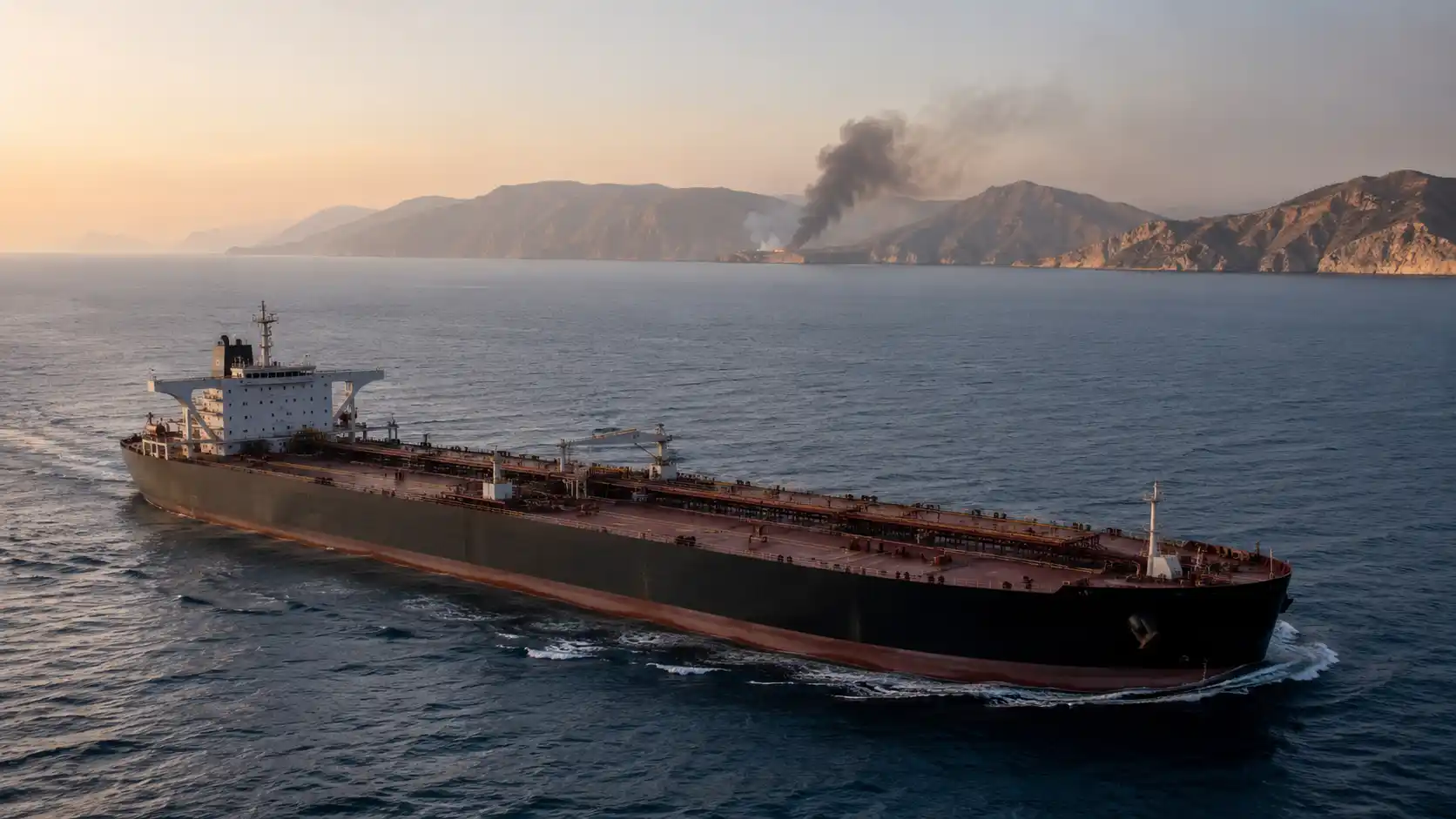
Brent moved above $90 a barrel as renewed escalation near the Strait of Hormuz increased risks to international oil supplies
Brent Moves Back Above $90
Global oil prices rose by more than 2% on August 31 after U.S. forces struck two Iranian launchers on Larak Island in the Strait of Hormuz.
According to Reuters, November Brent crude futures gained $2.21, or 2.51%, to $90.31 a barrel by 04:36 GMT. U.S. West Texas Intermediate rose by $1.83, or 2.19%, to $85.23 a barrel.
The increase reflected market concerns that renewed escalation between the United States and Iran could further restrict supplies through the Strait of Hormuz. Before the conflict began, approximately one-fifth of the world’s oil supply moved through the waterway.
U.S. Forces Targeted Two Launchers
The strike took place on August 30 and marked the first known U.S. attack on Iranian territory since late July.
A U.S. official said two launchers were targeted. Washington claimed that Islamic Revolutionary Guard Corps personnel had been preparing to use them to launch rockets carrying sea mines into the Strait of Hormuz.
Iranian sources said drones were used in the attack. The Revolutionary Guards reported deaths and injuries among military personnel and civilians but did not provide a precise casualty figure.
Tehran subsequently said it had attacked U.S. military facilities in Jordan. The American side reported that nearly all incoming missiles were intercepted and that no significant damage had been recorded. No independent assessment of the results has yet been published.
Markets Focus on Risks to Hormuz Shipping
Larak Island is located directly beside the strategic shipping route. The market therefore reacted not only to the strike itself but also to the possibility of new mine deployments, tanker attacks and tighter restrictions on commercial navigation.
The number of visible commodity vessels passing through the strait fell to approximately five per day over the weekend. The figures do not include ships that switched off AIS or restricted their position transmissions, but they indicate continued caution among carriers.
Risks increased further after the United Kingdom Maritime Trade Operations reported that an inbound tanker had been struck by a projectile. Such incidents directly affect the decisions of shipowners, insurers and cargo interests considering additional voyages into the Gulf.
As K2Cargo.News previously reported, visible traffic through the Strait of Hormuz had already fallen to seven commodity vessels on August 27. Renewed attacks could delay negotiations between Iran and Oman over a proposed shipping corridor.
Higher Oil Prices Increase Transport Costs
Rising crude prices could gradually affect the cost of marine fuel, diesel and aviation fuel. Transport operators may consequently face higher operating expenses and new or increased fuel surcharges.
The impact is generally transmitted most quickly to maritime transport and aviation, where fuel accounts for a substantial share of costs. Road carriers could also face additional pressure if higher crude prices are passed through to diesel markets.
Cargo owners must consider more than fuel prices. Insurance premiums, vessel waiting times and delivery schedules could also increase. If Hormuz traffic is restricted further, the tanker market will need additional vessel capacity to maintain the same level of cargo movement.
Oil Could Remain Within an $85–95 Range
Talks aimed at ending the conflict and restoring navigation through the Strait of Hormuz remain stalled. Suvro Sarkar, head of energy research at DBS, said a contained confrontation appeared more likely than a sustained escalation.
“Expect oil prices to remain rangebound in the $85–95 per barrel range,” Suvro Sarkar said
The outlook depends heavily on conditions in the strait. A verified and sustained return of regular shipping could reduce the geopolitical premium included in oil prices. Further attacks against vessels, terminals or energy infrastructure could instead trigger another increase.
U.S. President Donald Trump’s claim that Iran’s Kharg Island energy hub was being attacked has not been confirmed. The accompanying video was generated using artificial intelligence. The two launchers on Larak Island therefore remain the confirmed targets of the latest U.S. operation, rather than Kharg’s oil infrastructure.
Read also: Oil Market Shock May Last Until 2027