

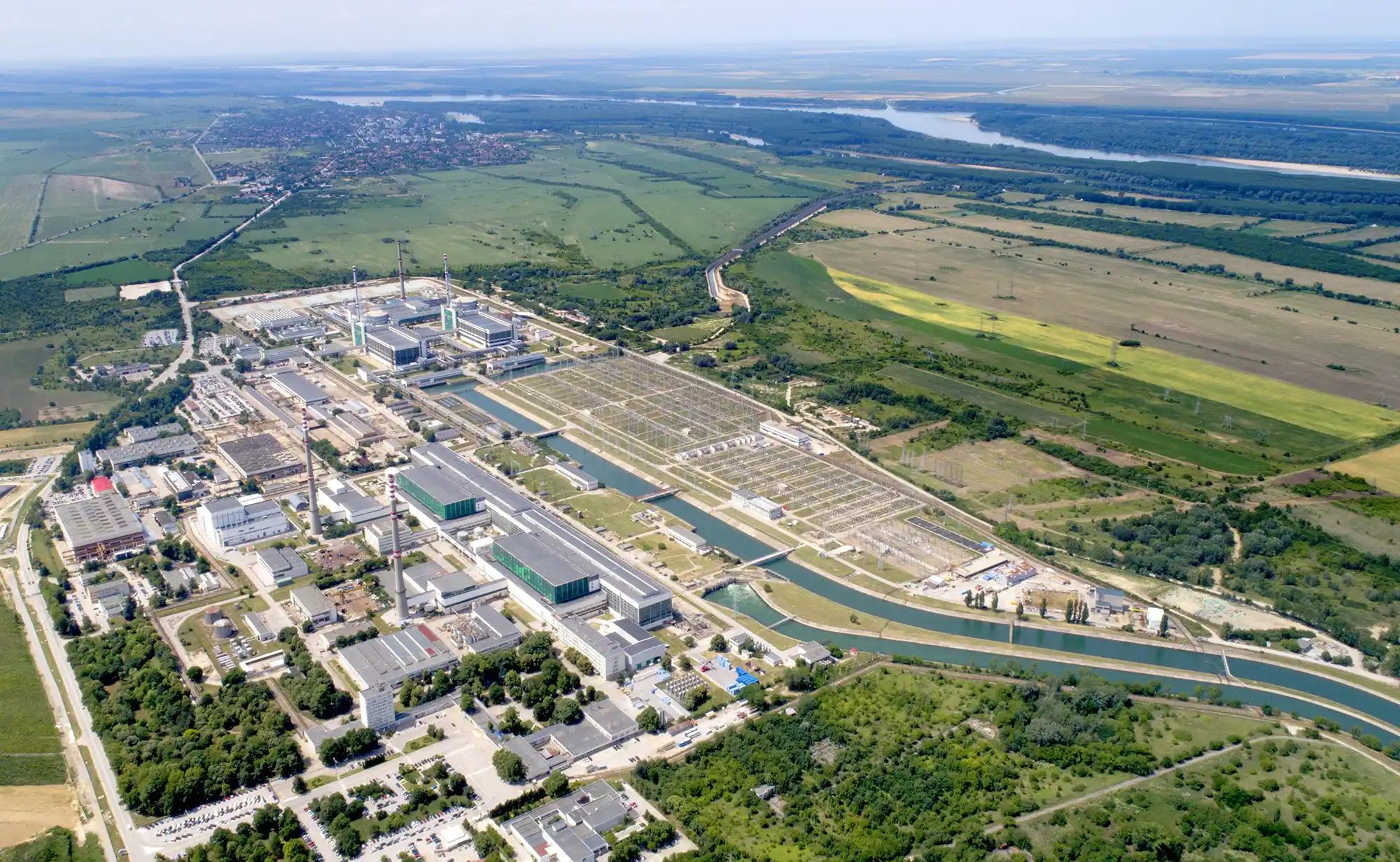
Extremely low water levels have already forced the country’s only nuclear power station to reduce one unit’s output for the first time in its 52-year history
Project Remains at the Design Stage
The Bulgarian government is considering a hydraulic structure on the Danube near the Kozloduy Nuclear Power Plant. Its purpose would be to maintain sufficient water levels around the station’s pumping infrastructure during prolonged drought and exceptionally low river conditions.
Bulgarian Energy Minister Iva Petrova told Bulgarian National Television that the proposed dike would be between 250 and 300 metres long. Construction could take approximately 10 to 15 days.
The plan does not involve blocking the entire Danube. It concerns a local structure near the plant’s water-intake facilities intended to increase the water level in the area where it is required.
The final design has not yet been approved. Engineers are preparing the project and assessing the results of hydraulic modelling.
Seven Possible Solutions Have Been Assessed
Preparations for critically low Danube levels began in July. Authorities surveyed the riverbed near the plant, collected updated hydrological data and used a mathematical model to estimate the effects of different engineering measures.
Around seven options were examined. In addition to constructing the dike, the government is considering transferring water from internal reservoirs to the power station.
According to Petrova, the necessary equipment and personnel can be mobilised once the project is approved. However, a formal decision to begin construction had not been announced at the time of her statement.
“The situation is extreme. The plant has never operated under such conditions, but its teams are coping,” Petrova said.
Unit 5 Output Was Reduced by 120 MW
The unprecedented decline in the Danube prompted Kozloduy management to preventively reduce Unit 5’s output by approximately 120 MW.
According to the official Kozloduy NPP announcement, this was the first weather- and hydrology-related reduction in the plant’s 52-year operating history.
A slight recovery in the river level allowed the unit to continue operating at a partially reduced load. The plant’s second operational unit remained online, although officials did not rule out adjusting its output if river conditions deteriorated again.
Kozloduy operates two units with capacities of slightly more than 1,000 MW each and normally supplies around 35% of Bulgaria’s electricity demand.
No Immediate Nuclear Safety Risk Reported
The output reduction was intended to ease the burden on riverside pumping facilities that supply cooling water to the turbine equipment.
Plant representatives stressed that the measure was preventive and did not indicate a reactor malfunction. The government also said there was currently no threat to nuclear safety, electricity supplies or the stability of Bulgaria’s power system.
Bulgaria consumes approximately 90,000 MWh of electricity per day, produces around 130,000 MWh and exports about 31,000 MWh. Additional thermal and hydropower capacity has been prepared to support the grid if required.
Low Water Disrupts Energy and Freight Navigation
Critically low Danube levels are affecting more than power generation. Reduced navigable depth limits vessel draught, forces barge operators to carry smaller loads and raises the transport cost per tonne.
Shipments of grain, petroleum products, coal, ores and construction materials are particularly exposed. When available depth becomes insufficient, operators must divide cargoes among more vessels or transfer part of the volume to rail and road transport.
Construction near an active navigation channel must also consider shipping safety and the Danube’s cross-border status. Detailed plans for the proposed Kozloduy structure and an assessment of its potential impact on navigation have not yet been published.
The project demonstrates that prolonged low water on European rivers is becoming a systemic risk for energy, industry and freight corridors simultaneously. A dike near Kozloduy would provide an emergency response, while longer-term resilience may require infrastructure designed for recurring extreme hydrological conditions.
Read also: Rhine Navigation Gauge Falls to 12 cm as Cargo Traffic Nearly Stops