

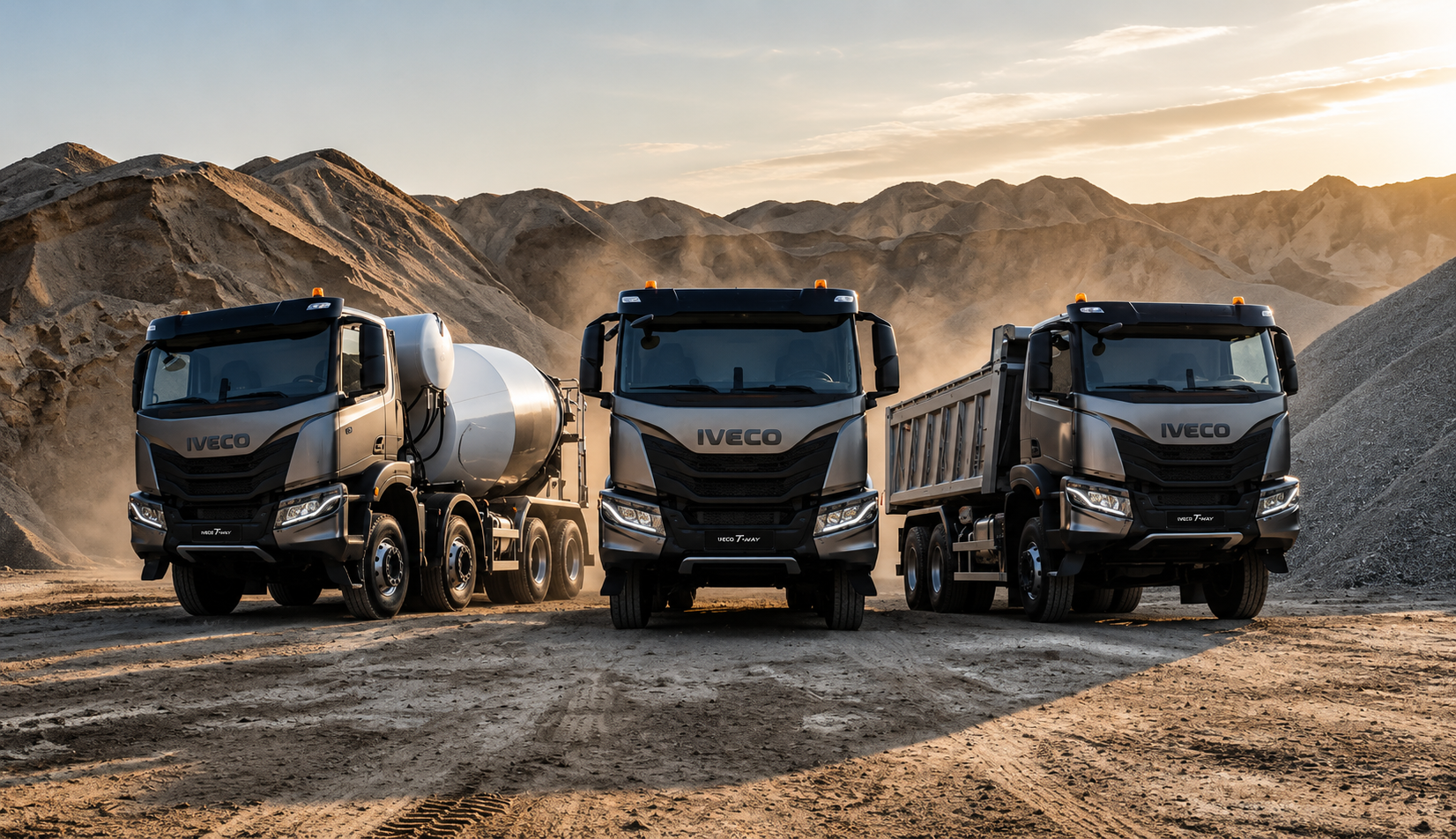
Iveco has presented its 2026 vehicle range and new service ecosystem, highlighting changes that go far beyond exterior design. The latest demonstration fleet is now entering the roads, and the most important updates are concentrated in electronic systems, safety technology and digital fleet management.
The 2026 demonstration vehicles can be recognized by a new signature color — Iveco Metallic Grey. The color is intended to create a more unified brand identity across the range, but the real changes are inside the vehicle and behind the digital systems that support it.
For transport companies, the new generation is important because modern trucks are increasingly evaluated not only by fuel consumption, engine power or cab comfort, but also by software, driver assistance systems, uptime monitoring and telematics. Fleet operators need vehicles that can reduce total cost of ownership, predict failures, support drivers and provide clear operational data.
As K2Cargo News previously reported in AI Is Transforming Europe’s Logistics Industry, digital tools are becoming one of the main competitive factors in logistics. Iveco’s 2026 updates fit directly into this trend.
Driver Monitoring Becomes Mandatory
One of the most discussed changes in the 2026 range is the Advanced Driver Distraction Warning system, known as ADDW.
The system uses a small interior camera to monitor the driver’s eyes and head movements. Its task is to detect signs of distraction, fatigue or loss of attention and warn the driver before the situation becomes dangerous.
The technology has caused debate among drivers because it introduces continuous in-cab monitoring. Some drivers see this as an intrusive system, especially if warnings are too frequent or poorly calibrated. However, the direction is now clear: driver monitoring is becoming part of standard European truck equipment.
Under the EU General Safety Regulation, ADDW systems become mandatory for all newly registered vehicles in relevant categories from July 2026. This means the system is not only an Iveco decision, but part of a wider regulatory shift affecting all truck manufacturers selling new vehicles in Europe.
For fleet operators, the key issue will be implementation. A well-calibrated system can help reduce distraction-related accidents. A poorly calibrated one can irritate drivers and create alert fatigue. The effectiveness of ADDW will therefore depend not only on the hardware, but also on software logic, user experience and driver acceptance.
Highway Assist Adds More Automation
Another notable feature in the 2026 range is Highway Assist.
This optional system helps keep the truck safely within its lane on motorways. It works through active steering assistance and is designed to support the driver during long highway journeys.
Highway Assist should not be confused with full autonomous driving. The driver remains responsible for the vehicle and must stay attentive. However, the feature can reduce workload on long, repetitive motorway sections, especially when combined with adaptive safety systems and lane control.
For long-haul transport, this type of assistance is becoming increasingly relevant. European drivers spend many hours on motorways, often under tight schedules and in dense traffic. Systems that help maintain lane position and improve stability can support safety and comfort, particularly on longer routes.
The challenge is the same as with other driver assistance technologies: the system must support the driver without encouraging overreliance. Professional training and clear communication from manufacturers and fleet managers will be essential.
Iveco On Becomes a Fleet Intelligence Platform
The biggest changes for fleet operators may come not from the cab, but from the digital platform.
Iveco has redesigned its Iveco On fleet management system. The new interface recently received the iF Design Award 2026 for its digital user experience, reflecting the company’s effort to make telematics clearer, more useful and more intuitive.
The system continues to provide the core functions expected from modern telematics: vehicle health monitoring, driver behavior analysis, fuel consumption data, electric vehicle charge status, satellite location and operational alerts.
But Iveco is trying to move the platform beyond simple monitoring. The redesigned system is positioned as an intelligent fleet advisor, turning real-time data and predictive insights into practical recommendations for fleet managers.
This matters because large fleets generate enormous amounts of data. Without a clear interface, data can become noise. Fleet managers need systems that highlight problems, suggest actions and help reduce fuel consumption, downtime and inefficient driving behavior.
Predictive Maintenance Becomes More Important
Iveco’s 2026 service ecosystem also places strong emphasis on uptime.
For transport companies, a truck that is off the road is not just a technical problem. It means missed deliveries, replacement costs, driver disruption and possible contractual penalties.
Iveco says its connected services are designed to detect anomalies before they become failures. Vehicle data is monitored continuously, and if a potential issue is identified, the customer can be alerted before a breakdown occurs.
This approach reflects a broader industry shift from reactive maintenance to predictive maintenance. Instead of repairing trucks only after something fails, manufacturers and fleets are increasingly using data to plan service stops at the right time.
For logistics companies, this can improve reliability and reduce unexpected downtime. It can also help fleet managers plan workshop visits around route schedules rather than emergency repairs.
GeoTrack Shows Repairs in Real Time
A new service function called GeoTrack adds another layer of visibility.
The feature allows carriers to track the repair process while a vehicle is in the workshop. Fleet operators can receive real-time information about the stage of work on a specific truck and the expected completion time.
According to Iveco, the system combines data from diagnostic equipment, service case records and geofencing, which tracks the vehicle’s position inside the workshop.
For transport companies, this is a practical improvement. One of the biggest frustrations during repairs is uncertainty. If a fleet manager does not know when a truck will return to service, it becomes harder to plan replacement capacity, assign drivers or reorganize deliveries.
GeoTrack is designed to reduce that uncertainty. It turns workshop time into a more transparent process and gives operators better control over vehicle availability.
Software Is Becoming Part of the Truck
The 2026 range also reflects another important change: trucks are becoming software-defined assets.
Iveco says the new generation is designed for over-the-air software updates and future digital services. This allows vehicles to evolve after delivery, with updates and new applications integrated into the in-cab digital environment.
For fleets, this creates both opportunities and responsibilities. On the positive side, software updates can improve functionality, correct problems and add services without taking the vehicle out of operation for long periods. On the other hand, fleets need stronger internal processes for cybersecurity, data management and driver training.
The truck is no longer only a mechanical asset. It is becoming a connected digital platform.
What This Means for Transport Companies
For carriers, Iveco’s 2026 updates confirm a major shift in the truck market.
The competition between manufacturers is no longer limited to engines, cabins and fuel economy. It now includes driver monitoring, lane assistance, telematics, predictive maintenance, fleet dashboards, workshop transparency and digital services.
For large fleets, these systems can provide measurable operational benefits. Better fuel data can reduce costs. Driver behavior analysis can support training. Predictive maintenance can improve uptime. Real-time workshop visibility can help dispatchers plan capacity.
For small and mid-sized transport companies, the benefits may also be significant, but only if the systems remain simple and affordable. Digital tools must save time rather than create additional administrative work.
The main question for 2026 will be how well Iveco and other manufacturers can balance technology with usability. Drivers need systems that help them, not systems that constantly interrupt them. Fleet managers need actionable insights, not endless dashboards.
Iveco’s new range shows where the industry is moving: toward connected trucks, predictive services and more automated safety systems. For logistics companies, the message is clear. The future of fleet efficiency will depend as much on data and software as on horsepower and fuel tanks.